AI rollouts
Why AI projects fail: what the studies actually measured
We trace every widely quoted AI failure rate back to its source, then look at the causes the evidence actually supports.
No study has measured a universal failure rate for AI projects. The two most quoted figures, 80% and 95%, trace to a vendor's unnamed surveys and to a small 2025 sample that measured something narrower than failure.
The better evidence is about value. Between a quarter and a third of companies report real financial return from AI, and the causes behind the rest sit mostly with leadership and people rather than with the technology.
Every AI failure statistic, traced to its source
The numbers in circulation come from four different kinds of evidence: forecasts, surveys of executives, interviews, and one estimate nobody can trace. They measure different things, and most of the confusion comes from treating them as the same thing.
| As quoted | Source | What it actually measured | Verdict |
|---|---|---|---|
| "95% of AI pilots fail" | MIT NANDA, The GenAI Divide, July 2025 | Self-reported profit and loss return, measured six months after a pilot, from 52 interviews and 153 survey responses gathered at four conferences. Separately, 5% of custom AI tools reached production. | Narrower than quoted, and a small self-selected sample. |
| "More than 80% of AI projects fail" | RAND, 2024, quoting Fortune, 2022 | RAND introduces the figure as an outside estimate. Its source is a magazine article quoting a vendor's chief executive on unnamed surveys. | No measured basis anywhere in the chain. |
| "85% of AI projects fail" | Gartner press release, February 2018 | A prediction that through 2022, 85% of AI projects would deliver erroneous outcomes because of bias in data, algorithms or teams. | A forecast about biased output, now expired. |
| "70% of change initiatives fail" | Hammer and Champy, 1993 | The authors called it their own unscientific estimate, about reengineering. A 2011 review found no valid evidence for it. | A myth, older than generative AI. |
| 42% abandoning most AI initiatives | S&P Global Market Intelligence, May 2025 | Share of companies that abandoned the majority of their AI initiatives before production, up from 17%. Survey of 1,006 IT and business professionals. | Accurate. It counts companies, not projects. |
| 30% of generative AI projects abandoned | Gartner, July 2024 | A prediction that at least 30% of generative AI projects would be abandoned after proof of concept by the end of 2025. | A forecast, not a measurement. |
| 40% of agentic AI projects canceled | Gartner, June 2025 | A prediction that more than 40% of agentic AI projects will be canceled by the end of 2027. | A forecast, not a measurement. |
| Only 48% reach production | Gartner survey, May 2024 | Of 644 respondents' AI projects, 48% made it into production, taking eight months on average. Not reaching production is not the same as failing. | Accurate, and narrower than failure. |
| 74% see no tangible value | BCG, October 2024 | Share of 1,000 executives' companies that had yet to show tangible value from AI. | Accurate, from a consultancy survey. |
| 37% report positive EBIT | McKinsey, The State of AI, August 2026 | Share of 1,719 respondents' organizations reporting any positive earnings contribution from AI, roughly flat on the year before. | The best current number on value. |
| 25% of initiatives hit expected ROI | IBM Institute for Business Value, May 2025 | 2,000 chief executives' own estimate of how many AI initiatives delivered the return they expected. 16% had scaled enterprise-wide. | Accurate, as a self-assessment. |
Every row was checked against the publisher's own report, release or page. Full references are at the bottom of this page.
The 95% figure from MIT: what it measured
The claim that 95% of AI pilots fail comes from The GenAI Divide, a July 2025 report from MIT's NANDA project. What the report says is that 95% of organizations were getting zero return on their generative AI spending, measured as profit and loss impact six months after a pilot.
The evidence behind it is a review of more than 300 public AI initiatives, 52 interviews, and 153 survey responses collected at four industry conferences between January and June 2025. The report calls its own figures directionally accurate rather than official, notes the risk of self-selection, and labels itself preliminary findings. It also promotes protocols the same project builds.
The report's more useful findings get less attention. Only 5% of custom, task-specific AI tools made it from evaluation into production, while generic chatbots converted at a far higher rate. Tools bought from outside partners reached deployment about twice as often as tools built in house. And workers at more than 90% of companies were already using personal AI tools, while only 40% of companies had bought an official subscription. The gap the report found is between what people are doing with AI and what their organizations have managed to deploy.
Where the 80% comes from
"RAND found that more than 80% of AI projects fail."
RAND's 2024 report, The Root Causes of Failure for Artificial Intelligence Projects, introduces that figure with the words "by some estimates" and cites a 2022 Fortune article. That article quotes the chief executive of an AI vendor citing unnamed surveys that put failure between 83% and 92%. RAND did not measure it.
Many pages go further and describe RAND's study as an analysis of 65 initiatives, or of more than 2,400. RAND interviewed 65 people: 50 experienced industry practitioners and 15 academics. The value of the report is in what those people said about causes, and that part is well worth reading.
Leadership-driven failure came first by a wide margin, named as the primary cause by 84% of the industry practitioners interviewed: leaders optimizing for the wrong business problem, setting unrealistic expectations, and asking for models that do not fit how the work is actually done. Missing or inadequate data came second.
The 70% figure is older than AI
"70% of change initiatives fail" predates generative AI by three decades. It began as Hammer and Champy's own unscientific estimate in a 1993 book about reengineering, and a 2011 review in the Journal of Change Management found no valid empirical evidence for it. It is now routinely applied to AI programs. We cover it in full on our page of questions about AI and jobs.
What actually makes AI projects stall
Set the failure rates aside and the studies with real methods agree on causes to a striking degree. None of the leading causes is the model.
The wrong problem, set from the top
RAND's interviewees put leadership first: unclear problem definition, unrealistic expectations, and projects chosen for the technology rather than the business need.
Value never defined
Gartner's survey found the top obstacle, named by 49%, was estimating and demonstrating the value of AI projects. A pilot with no agreed measure of success cannot win the decision at the end of it.
Data that is not there
Second in RAND's interviews, and one of the reasons Gartner gave for expecting projects to be abandoned after proof of concept.
AI bolted onto the old workflow
McKinsey's 2026 survey found the companies getting value redesign workflows rather than inserting AI into existing ones. MIT's report pointed at the same thing from the other side: brittle workflows and tools that never learned the context of the work.
Managers who stay on the sidelines
Employees whose manager actively supports their team's AI use are 8.7 times as likely to say AI has transformed how work gets done, and fewer than one in three say their manager does (Gallup, State of the Global Workplace 2026). It is the largest single variable measured, and the least managed.
BCG reaches the same conclusion from a survey of 1,000 executives: about 70% of AI implementation challenges come from people and process, 20% from technology, and 10% from the algorithms themselves.
What the companies getting value do differently
The pattern in the evidence is unglamorous. The companies getting a return choose a business problem first, define what success looks like before they build, redesign the work around the tool, and put a manager in front of every team whose job is changing.
Technologists often assume that technical challenges are the bottlenecks in AI adoption. In reality, leadership is the limiting factor.
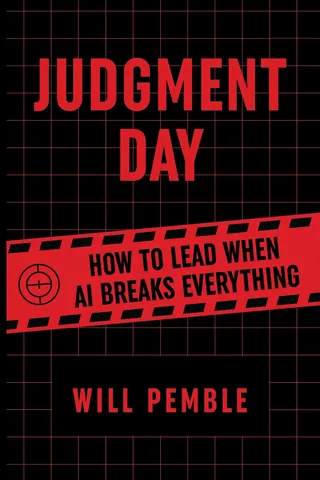
Judgment Day, chapter 1
In practice we run this as a 90-day readiness sprint: audit what is actually in use and what people believe about their own jobs, arm the managers before anyone else, run small experiments on a fixed clock against metrics that matter, and debrief. Every experiment ends in a decision to scale it, change it or stop it. A pilot with no date for that decision is how projects drift into the statistics above. The whole method is on one page, and the people side of it is on our page about AI change management.
Questions
Is it true that 95% of AI pilots fail?
Not as stated. The MIT NANDA report behind the number measured whether organizations reported a return on generative AI six months after a pilot, from 52 interviews and 153 survey responses. Its authors describe the figures as directionally accurate and the report as preliminary. Its sharper finding is that only 5% of custom AI tools reached production.
Do 80% of AI projects fail?
There is no study that shows it. RAND's 2024 report repeats the figure as an outside estimate, citing a 2022 Fortune article that quoted a vendor executive on unnamed surveys. RAND's own research, interviews with 65 practitioners and academics, was about causes, and it found leadership the most common one.
What percentage of AI projects fail?
Nobody has measured a single rate, because studies define failure differently. The best current evidence is about value rather than failure: 37% of organizations report any positive earnings contribution from AI (McKinsey, 2026), and chief executives say about a quarter of their AI initiatives delivered the return they expected (IBM, 2025).
Why do AI pilots fail to reach production?
The obstacle most often named is proving value. In Gartner's survey, 49% cited estimating and demonstrating the value of AI projects as the top barrier, and only 48% of projects reached production. A pilot that never defined what success would look like has nothing to show when the decision comes.
Why may 85% of AI models fail?
That number comes from a 2018 Gartner prediction that through 2022, 85% of AI projects would deliver erroneous outcomes because of bias in data, algorithms or the teams managing them. It was a forecast about biased output, and its window has closed. It was never a measured failure rate.
How many companies are abandoning AI projects?
S&P Global found that 42% of companies abandoned the majority of their AI initiatives before production in 2025, up from 17% the year before. On average, respondents said 46% of projects were scrapped between proof of concept and broad adoption.
Is AI failure a technology problem or a people problem?
Mostly people and leadership. In RAND's interviews, 84% of practitioners named leadership-driven failure as the primary cause, ahead of data problems. BCG reports that about 70% of AI implementation challenges come from people and process, 20% from technology and 10% from the algorithms themselves.
What do successful AI projects have in common?
The companies getting value redesign the work rather than bolting AI onto an existing process, according to McKinsey's 2026 survey. They also have managers who visibly back the change: employees whose manager actively supports their team's AI use are 8.7 times as likely to say AI has transformed how work gets done (Gallup).
Find out where your rollout is likely to stall
The free AI readiness assessment scores a team across the five areas that decide whether a rollout lands, and names the patterns that predict it failing. Four minutes, no account.
Sources
- MIT NANDA, "The GenAI Divide: State of AI in Business 2025," July 2025. mlq.ai/media/quarterly_decks/v0.1_State_of_AI_in_Business_2025_Report.pdf
- Ryseff, De Bruhl and Newberry, "The Root Causes of Failure for Artificial Intelligence Projects and How They Can Succeed," RAND, 2024. rand.org/pubs/research_reports/RRA2680-1.html
- Gartner, "Gartner Predicts 30% of Generative AI Projects Will Be Abandoned After Proof of Concept By End of 2025," July 29, 2024. gartner.com/en/newsroom/press-releases/2024-07-29-gartner-predicts-30-percent-of-generative-ai-projects-will-be-abandoned-after-proof-of-concept-by-end-of-2025
- Gartner, prediction on agentic AI project cancellations, June 25, 2025. gartner.com/en/newsroom
- Gartner, survey on AI projects reaching production, May 7, 2024. gartner.com/en/newsroom
- S&P Global Market Intelligence, "AI experiences rapid adoption, but with mixed outcomes," May 30, 2025. spglobal.com/market-intelligence/en/news-insights/research/ai-experiences-rapid-adoption-but-with-mixed-outcomes-highlights-from-vote-ai-machine-learning
- BCG, "AI Adoption in 2024: 74% of Companies Struggle to Achieve and Scale Value," October 24, 2024. bcg.com/press/24october2024-ai-adoption-in-2024-74-of-companies-struggle-to-achieve-and-scale-value
- McKinsey, "The State of AI," August 25, 2026. mckinsey.com/capabilities/quantumblack/our-insights/the-state-of-ai
- IBM, "IBM Study: CEOs Double Down on AI While Navigating Enterprise Hurdles," May 6, 2025. newsroom.ibm.com/2025-05-06-ibm-study-ceos-double-down-on-ai-while-navigating-enterprise-hurdles
- Gallup, State of the Global Workplace 2026. gallup.com/workplace/349484/state-of-the-global-workplace.aspx
- Hughes, M., "Do 70 per cent of all organizational change initiatives really fail?" Journal of Change Management, 2011. doi.org/10.1080/14697017.2011.630506