
Position
Somewhere in your company there is a marketing manager doing the arithmetic on a mortgage. They have read that AI is coming for work like theirs, and the reading is not wrong. They have also sat through the all-hands where someone said AI will augment rather than replace and nobody is going anywhere. They did not believe it, and they were right not to.
They have two places to go for an answer. One is a feed saying the technology may end the species, with a probability attached and no instruction of any kind. The other is their own director, telling them it will be fine. The first gives them nothing to act on. The second is a promise that director has no authority to make, and they can tell.
I want to make the case that the second failure is the expensive one, and that it is the one leaders keep choosing. Reassurance you cannot underwrite is the most costly thing you can offer an anxious team, because it spends the only asset you will need later.
Start with whether that worry is irrational, because almost every corporate response assumes it is. It is not.
US job cuts announced through July 2026 that named AI as a reason, around 24% of all cuts, against 54,836 in all of 2025. AI has now been the single most-cited reason for five consecutive months. Challenger, Gray & Christmas, July 2026 report
Alongside that, 18% of US employees say their job is likely to be eliminated within five years, rising to 23% at organizations that have actually implemented AI, and that 18% is up from 15% a year ago (Gallup). Mercer has the share of employees naming AI-driven job loss as a fear going from 28% in 2024 to 40% in 2026 (Mercer, a disclosed survey of roughly 12,000 people).
So the fear is rising, and the cuts underneath it are real and accelerating. Treating that worry as a morale problem to be managed down means discarding the most accurate instrument you have for finding out where your rollout is about to fail.
Being accurate about the fear also means being accurate about its shape, and here the evidence cuts against the panic.
MIT FutureTech had experienced workers run more than 17,000 evaluations across over 6,000 text-based tasks drawn from the Department of Labor's own O*NET taxonomy. They found little evidence of capability jumping abruptly across narrow sets of work, which is the crashing wave everyone pictures, and substantial evidence of a rising tide instead: continuous, broad improvement (MIT FutureTech). On tasks that take a person about an hour and a half, models succeeded roughly 60% of the time in mid-2024 and above 70% by late 2025. Meanwhile Goldman Sachs, working from Census Bureau data, put US establishment AI adoption at 22.4% in August 2026, with firms expecting a little under 26% within six months (Goldman Sachs). The Challenger cuts are also concentrated rather than general, with technology the dominant sector.
Put those together and you get something more useful than either camp is selling. Their whole occupation almost certainly does not disappear next quarter. Individual tasks inside it move continuously, in different directions, and nobody sends an announcement when they do. That is a harder thing to plan against than an apocalypse, and it is the truth.
The standard prescription is training. Get fluent, stay valuable. It is decent advice and you should follow it. What it is not is a treatment for the fear, and the evidence on that point is the most uncomfortable number in this essay.
Workers who use AI frequently are more than twice as likely to expect their job to be eliminated within five years as workers who use it rarely. Gallup, 2026
Fluency does not settle the question. It sharpens it. The people who use these systems every day are the ones best positioned to see what they will be able to do in eighteen months, and what they see makes them more worried rather than less. Anyone selling upskilling as an anxiety program is selling something that produces the opposite result, and the research saying so is public.
This matters for what you say on Monday. If you answer "am I still valuable here" with "we are investing in training," you have answered a different question, and they will notice that you dodged.
There is a gap between what companies buy for AI and what makes AI land, and it is wide enough to see from orbit.
62% of employees agree their leaders underestimate AI's emotional impact. Only 19% of HR leaders treat those impacts as part of their digital implementation strategy. Mercer, Global Talent Trends 2026. A disclosed survey rather than primary research.
The consequences show up in numbers nobody wants on a board slide. Mercer has employees thriving at work falling from 66% in 2024 to 44% in 2026, below pandemic levels (Mercer). Gallup has global engagement down to 20%, the first time it has recorded two consecutive annual declines and the lowest reading since 2020 (Gallup).
Here is the finding that should reorganize how rollout money gets spent.
Employees whose managers actively support their AI use are 8.7 times more likely to say their work has been transformed by AI. Fewer than one in three employees strongly agree that their manager does. Gallup's top two drivers of frequent AI use are integration with existing systems and manager-led adoption. Gallup, 2026
The single largest multiplier on an AI investment is a manager actively backing it, and two thirds of managers are not doing that. Not because they are obstructive. Because nobody gave them anything to say. They were handed a license count, a training deadline, and a deck, and then asked to stand in front of people whose livelihoods are in question and be convincing about a future the company has not decided yet.
So they reassure. It is the only move available when you have no information and a room full of frightened people. And it is the move that costs the most.
The alternative is not brutality and it is not a script. It is being specific about four things, one of which most leaders skip.
Name the decisions that are actually made, including the unwelcome ones. We are moving first-draft work to the model in Q1. That is decided.
People can plan against a decision. They cannot plan against a mood.
This is the part that gets skipped, and it is the part that buys you credibility. I do not know yet what this means for headcount in your team. I have not been told, and I am not going to guess in front of you.
Admitting the gap is survivable. Filling it with a guess that turns out wrong is not.
I will know more after the review on the fourteenth, and I will tell you what I learn on the fifteenth whether it is good or not.
A date converts open-ended dread into a wait. Then keep it, even when the news is nothing, because the second missed date ends this.
People are rarely asking whether the company will succeed. They are asking whether their own work still matters in six months and whether they should be looking. Answer that question, with what you know, at the level of their tasks rather than the company's strategy.
Notice what none of those require. No budget, no platform, no vendor, no survey. They require a manager willing to say "I do not know" out loud, which is a thing most organizations have spent twenty years training out of them.
Three honest objections, and I would rather raise them than have you find them.
The rising tide finding undercuts the urgency. If capability improves gradually and broadly, and if fewer than a quarter of US establishments have adopted AI at all, then maybe this is ordinary technological churn with an unusually loud press cycle, and the right response is patience rather than a program. That reading is available from the same sources I used above. My answer is that gradual change still produces the 112,713 announced cuts and the 40% fear number, and a manager standing in front of a worried team this month cannot wait for the average to resolve. But the objection is real and I will not pretend it is not.
Telling people to stop reassuring is convenient for me. I wrote a book about leading through this and I sell an engagement built on a diagnostic. An argument whose conclusion is "your managers need better language for a hard conversation" happens to point at what I do. Weigh that. The defense I would offer is that everything above is sourced to Gallup, Mercer, Challenger, MIT and Goldman rather than to my own numbers, and that the four things to say cost nothing and need nobody's help.
Some of what circulates here is not usable. The figures that would have made this essay easier are the ones I left out.
Not used: that 43% of major enterprise AI initiatives fail to produce measurable outcomes, that 63% of AI implementation failures stem from human factors, that 70% of AI initiatives never reach production because human factors were underestimated, and that roughly 70% of AI value comes from the people component. Each of those would have supported my argument directly. Each one traces to a vendor blog or a secondary citation rather than to a disclosed study, so none of them appear above as evidence.
The same goes for the 70% change-failure statistic that half this industry quotes. It originates in one sentence in a 1993 book, where the authors called it their own unscientific estimate, and one of them spent years publicly objecting to how it was being used. The full provenance is here.
Employee fear about AI mostly tracks reality, and the people most fluent with these tools are the most worried, so fluency is not the cure. The gap between what companies spend on AI capability and what they spend on human absorption is where the investment quietly dies, and the manager is both the largest available multiplier and the person handed the least to work with. The most valuable thing a leader can do is stop offering comfort they have no authority to deliver, and start being specific about what is decided, what is not, and when they will know. That is harder than reassurance and it is the only version anyone will believe.
Will Pemble is the author of Judgment Day: How to Lead When AI Breaks Everything and Goal Boss: The Art & Science of Getting Stuff Done.
If you want to know what your own team is carrying, the readiness diagnostic takes four minutes and stores nothing. If you are the one who is worried rather than the one being asked, there is a 90-day plan written for you instead of for your boss.
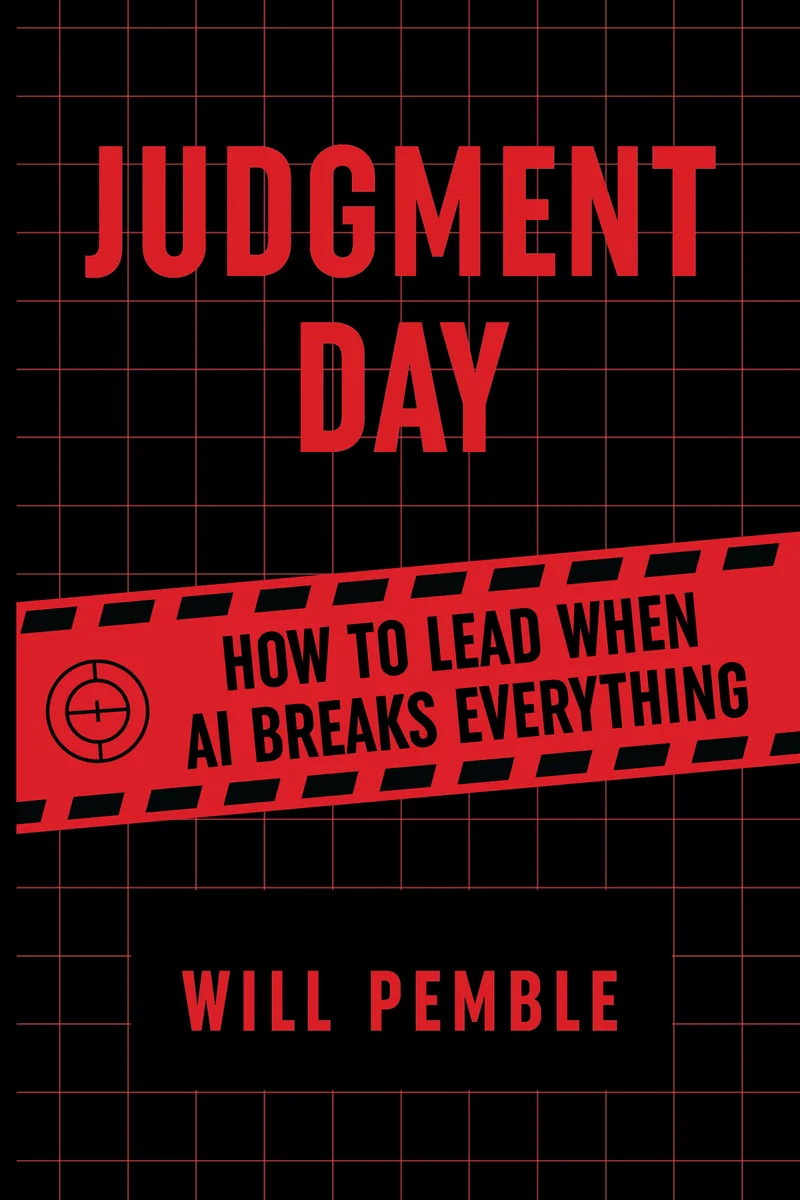
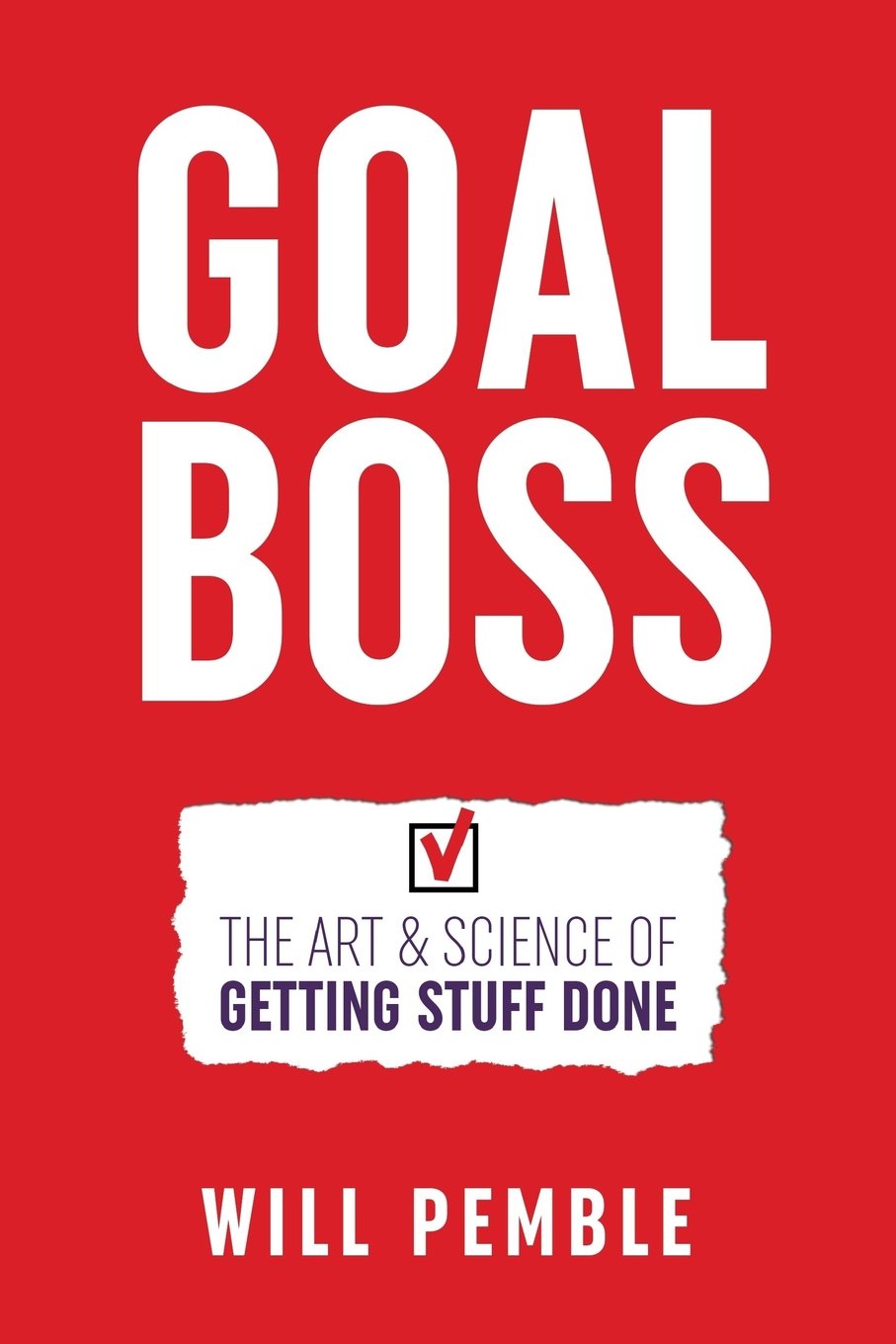
Two books by Will Pemble
Judgment Day is how to lead when AI breaks everything.
Goal Boss is the method underneath it.
Connect with Us:


© 2026 Goal Boss. All rights reserved.
Goal Boss uses cookies to improve your experience, analyze traffic, and provide secure services. By clicking Accept All, you consent to all cookies. By clicking Reject Non-Essential, only strictly necessary cookies will be used. See our Privacy Policy for details.
