AI rollouts
AI training for employees: what to teach, who goes first, and what to say alongside it
This page sets out a training program that raises skill without raising fear, in the order we run it.
Good AI training for employees is hands-on, built around each role's real work, and starts with managers. BCG found regular use is sharply higher when people get at least five hours of training with in-person coaching, so a single webinar will not do it.
It also needs a plain statement of what the organization plans to do with the skills. Gallup found that people who use AI frequently are more than twice as likely to expect their own job to be eliminated.
Most employees are using AI ahead of their training
of workers feel they have received adequate upskilling, while 72% say the skills expected of them have shifted.
BCG, 2026of US employees say their organization has communicated a clear plan for integrating AI.
Gallup, May 2026Usage has outrun training almost everywhere. In BCG's survey of close to 12,000 people, three quarters of frontline employees already call themselves AI users, and only about a third feel properly upskilled. Pew found that of US workers who took any job training in the past year, about a quarter took training related to AI. Most people are teaching themselves, on whatever tools they found, with no shared rules about what data goes where.
That is the situation most training programs walk into, and it changes what the training is for. Few of the people you train will be meeting AI for the first time. Many will be wondering what their own use of it means for their job.
Training raises skill, and it can raise fear
Gallup tracked workers across four survey waves from 2023 to early 2026 and found that those who use AI daily or several times a week are more than twice as likely to fear their job will be eliminated within five years as those who use it a few times a month or year. Fluency shows people clearly what the tools can do, and what that might mean for them.
Pair every training block with an honest conversation about what the organization intends to do with the capability people are being asked to build.
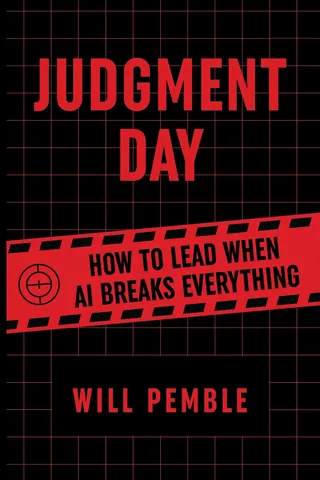
Judgment Day, chapter 10
The same research found the link between AI use and that fear was weaker among workers who rated their manager highly. Training delivered by a learning platform, with no conversation around it, gets the skill and misses the trust. More on the evidence is in our answer to whether AI training reduces anxiety.
Train managers first
Employees whose manager actively supports their team's use of AI are 2.1 times as likely to use it a few times a week or more, and only 28% strongly agree their manager does (Gallup, 2025). Inside companies, the gap is visible from the top: in Gallup's 2026 survey of 102 chief HR officers, 57% said they now provide AI training for managers, and half said they were not confident their managers could guide employees on using AI at work.
So the program starts with managers, for two reasons. They need their own hands-on fluency before they can back anyone else's, and they need language for the question their teams will ask the moment training starts. The US Department of Labor's 2026 AI literacy framework makes the same call, listing manager upskilling as its own role. Our page on AI change management covers what managers can say when they cannot promise anyone their job.
The curriculum: what to teach, in what order, to whom
This is the sequence we run. It follows the five areas of the Department of Labor framework (understand, explore, direct, evaluate, use responsibly), taught hands-on, which the framework names as the most effective way to build literacy.
| When | Who | What |
|---|---|---|
| Weeks 1 to 2 | Managers only | What the organization intends to do with AI and what it has not decided yet. How to answer "is my job safe?" without promising anything. Their own hands-on use on real work, and how to run a short weekly check-in with their team. |
| Weeks 3 to 4 | Everyone | Foundations: what AI is and is not, how it produces an answer, where it is unreliable, and the issues of bias, privacy and transparency. Taught on examples from your own business. |
| Weeks 3 to 4 | Everyone | Responsible use: what data may go into which tools, what must never go into a public model, when a person must check the output, and how to record work AI helped produce. |
| Weeks 5 to 8 | By role | Role tracks on real tasks: at least five hours each, with in-person coaching or a trained peer in the room. Sales, support, finance and operations practice on their own work, not on generic demos. |
| Week 9 onward | Every team | Practice in the regular weekly meeting: ten minutes on one AI skill, with someone from the team showing what they tried and what happened. |
| Every block | Everyone | The intent conversation: a plain statement of what the organization plans to do with the skills people are building, and a date when they will hear more. |
The weeks are a guide for a team of up to a few hundred people. The order matters more than the calendar.
Three rules hold the program together. Teach on real work, because people adopt what saves them time on Tuesday, not what impressed them in a demo. Give every role track enough hours to build a habit; BCG found regular use is sharply higher with at least five hours of training and access to in-person coaching. And keep practice going inside meetings the team already holds, so the skill does not fade the week after the course ends.
How to measure AI training
Completion rates tell you who sat through the course. They do not tell you whether anything changed. Measure four things instead, before the program and at the end of each 90 days:
- Usage. How often people use AI on real work, and for what.
- Confidence. Whether people feel prepared and comfortable using AI in their role.
- Manager support. Whether people say their manager actively supports their team's use of AI.
- Belief about their role. What people expect AI to mean for their own job.
Ask these directly and let people choose whether to answer. Report only for groups large enough that no individual can be identified, and never let one person's response reach their manager. Do not try to infer how people feel from their messages or their behavior. In the EU that is a prohibited practice under the AI Act, and everywhere else it is the fastest way to lose a team's trust. The AI readiness assessment covers this ground for a team in four minutes.
Is AI training legally required?
In the European Union, yes, in proportion to how you use AI. Article 4 of the AI Act has required providers and deployers of AI systems to take measures to support the AI literacy of their staff since February 2, 2025. An amendment in 2026 confirmed that no specific level is mandated, and the European Commission says no certificate is needed; an internal record of training is enough. National authorities began supervising the rule on August 2, 2026. It reaches organizations that deploy AI in the EU, which can include US companies with operations there.
In the United States there is no general requirement. The Department of Labor's AI literacy framework, published in February 2026, describes itself as voluntary guidance. Claims that the law requires a fixed AI course for every employee overstate both.
Questions
What should AI training for employees cover?
Cover five things, which match the US Department of Labor's 2026 AI literacy framework: how AI works and where it fails, where it fits your work, how to direct it, how to check its output, and how to use it responsibly, including what data never goes into a public tool. Teach it on each role's real tasks rather than generic demos.
How much AI training do employees need?
More than a webinar. BCG found that regular use is sharply higher for employees who receive at least five hours of training and have access to in-person training and coaching. Plan for hours of practice on real work, followed by a short weekly refresher inside meetings the team already holds.
Who should be trained on AI first?
Managers. Employees whose manager actively supports their team's AI use are 2.1 times as likely to use it a few times a week or more, yet only 28% strongly agree their manager does (Gallup). In Gallup's 2026 roundtable survey of chief HR officers, half were not confident their managers could guide employees on AI.
Does AI training reduce employee anxiety about AI?
Not by itself. Gallup found that workers who use AI daily or several times a week are more than twice as likely to fear their job will be eliminated within five years as those who use it a few times a month or year. The link was weaker where workers rated their manager highly. Pair training with a plain account of what the organization plans to do with the skills.
How many employees have actually been trained on AI?
A minority. In BCG's 2026 survey of close to 12,000 people, only 36% felt they had received adequate upskilling, while 72% said the skills expected of them had shifted. Pew found that of US workers who took any job training in the past year, about a quarter took training related to AI.
Is AI training legally required?
In the EU, the AI Act has required organizations that deploy AI to take measures to support their staff's AI literacy since February 2, 2025. As amended in 2026, it sets no specific level and needs no certificate; an internal record of training is enough. In the US, the Department of Labor's framework is voluntary guidance, not a requirement.
Why aren't employees using AI after training?
Usually because their manager is not visibly backing it. BCG found that the share of employees who feel positive about generative AI rises from 15% to 55% with strong leadership support. Training gives people the skill. Their manager decides whether using it feels welcome.
How do you measure whether AI training worked?
Measure more than completion. Track how often people use AI, whether they feel prepared and comfortable using it, whether they say their manager supports it, and what they believe about their own role. Ask directly, report only in groups large enough that no one can be identified, and never infer how people feel from their messages or behavior.
Start with where your team stands
The free AI readiness assessment scores a team on the five areas that decide whether a rollout lands, including team literacy, in four minutes. If you are planning training for a rollout now, tell us the function, the tool and the date.
Sources
- Makridis, C., "Using AI More Does Not Reassure Workers, Managers Do," Gallup, September 9, 2026. gallup.com/workplace/713231/ai-not-reassure-workers-managers-do.aspx
- Gallup, "AI's Effect on Workplace Culture," August 16, 2026. gallup.com/workplace/712976/ai-effect-workplace-culture.aspx
- Gallup, "Manager Support Drives Employee AI Adoption," November 8, 2025. gallup.com/workplace/694682/manager-support-drives-employee-adoption.aspx
- Gallup, "AI in the Workplace: Answering 3 Big Questions," October 7, 2024. gallup.com/workplace/651203/workplace-answering-big-questions.aspx
- Gallup, Global Indicator: Artificial Intelligence. gallup.com/699797/indicator-artificial-intelligence.aspx
- BCG, "AI at Work: Why Strategy Matters More Than Tools," June 3, 2026. bcg.com/publications/2026/ai-at-work-why-strategy-matters-more-than-tools
- BCG, "AI at Work 2025: Momentum Builds, but Gaps Remain," June 26, 2025. bcg.com/publications/2025/ai-at-work-momentum-builds-but-gaps-remain
- Pew Research Center, "Workers' exposure to AI," February 25, 2025. pewresearch.org/social-trends/2025/02/25/workers-exposure-to-ai/
- US Department of Labor, Training and Employment Notice 07-25, AI Literacy Framework, February 13, 2026. dol.gov/sites/dolgov/files/ETA/advisories/TEN/2025/TEN%2007-25/TEN%2007-25%20(complete%20document).pdf
- European Commission, "AI Literacy: Questions & Answers," updated July 27, 2026. digital-strategy.ec.europa.eu/en/faqs/ai-literacy-questions-answers