AI rollouts
What is AI transformation? Why most of it stalls, and what works
This page defines AI transformation from the side most guides skip: the people whose work it changes and the managers who have to lead them through it.
AI transformation is the work of changing how an organization decides, works and leads so that AI produces measurable results, not just usage. The technology is the smaller part: BCG's model puts 70% of the effort into people, organization and processes.
The organizations getting results are the ones whose managers lead the change. Employees whose manager actively backs their team's use of AI are 8.7 times as likely to say AI has transformed how work gets done (Gallup).
What AI transformation is, and what it is not
Most definitions describe a technology program: integrate AI into processes, build the data foundation, modernize the stack. Those are inputs. The transformation is what happens to the work: which tasks people still do, which decisions move faster, which roles change shape, and whether the results the organization cares about move.
The question is not "How do we implement AI?" but "How does AI help us solve a problem our customers care about?"
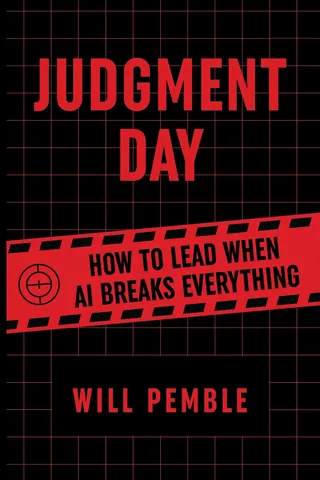
Judgment Day, chapter 7
That is also the difference from digital transformation. Moving a process from paper to a screen left the people doing it largely in place. AI changes who does what, so every AI transformation is a people transformation whether it is planned as one or not.
How far organizations have actually got
of respondents attribute at least some EBIT impact to AI, about the same as a year earlier. About 6% are high performers.
McKinsey, August 2026of AI initiatives delivered the return chief executives expected, and 16% scaled enterprise-wide.
IBM, 2025, 2,000 CEOsSpending has roughly doubled in a year, and the returns are starting to show. BCG's September 2026 index of 1,330 executives says nearly half of companies are already creating real value from AI, against 2024, when 74% had yet to show any tangible value. Yet McKinsey finds the share reporting any earnings impact unchanged at 37%, and only about 6% attribute 5% or more of their earnings to AI. The gap between spending and results is still wide, and the next section is about where it opens. The failure statistics themselves, traced to their sources, are on our page about why AI projects fail.
Why most AI transformation stalls
The studies with real methods agree that the technology is rarely the bottleneck. BCG traced about 70% of AI implementation challenges to people and process, 20% to technology and only 10% to the algorithms. RAND's interviews with experienced practitioners found leadership-driven failure the most common root cause by a wide margin, named as primary by 84% of the industry practitioners it interviewed.
You can rent more GPUs, hire data scientists and subscribe to a model API. You cannot outsource accountability, culture or strategy.
Judgment Day, chapter 1
McKinsey's high performers point the same way from the other side. They fundamentally redesign workflows around AI rather than inserting it into existing ones, and they back their deployments with leadership commitment. Meanwhile the people expected to carry the change are under-supported: fewer than one in three employees say their manager actively supports their team's use of AI, and in Gallup's 2026 survey of 102 chief HR officers, half were not confident their managers could guide employees on AI.
The 10-20-70 split, and what the 70 is made of
BCG's model for AI programs says that 10% of the effort should go into the algorithms, 20% into technology and data, and the remaining 70% into changes to people, organization and processes. It is a guide to where effort belongs rather than a measured result, and it matches what BCG's own surveys keep finding about where programs get stuck.
In practice the 70% is unglamorous work:
- Managers who use the tools themselves, back their teams' use, and can answer the job question honestly.
- Workflows redesigned around what AI does well, with decisions and handoffs moved to match.
- Training on real tasks, paired with a plain statement of what the organization plans to do with the skills. Our page on AI training for employees sets out the sequence.
- A weekly scoreboard of adoption, usage and outcomes, reviewed in the meetings teams already hold.
- Rules on data and review that people can actually follow, so hidden use comes into the open.
What AI transformation does to the workforce
Leaders are planning for fewer people. Executives in BCG's 2026 index expect a workforce reduction of roughly 10% to 15% by 2030, concentrated in coordination and middle-management layers, and seven in ten of the most advanced companies are already retraining staff. Challenger counted 120,136 announced US job cuts citing AI through September 2026, about 21% of all cuts; the month-by-month record is on our AI layoffs 2026 tracker.
Employees can see it coming. Mercer found 62% of employees agree that leaders underestimate AI's emotional impact, while only 19% of HR leaders consider that impact as part of their digital implementation strategy. That gap is where trust goes. A manager usually cannot promise anyone their job, and should not try. What a manager can do is say what they know, what they do not know and when they will know more, and keep the promises they control. The longer argument is in Stop reassuring your team about AI.
You do not need a five-year plan: a 90-day AI transformation roadmap
By the time your carefully crafted plan is printed and bound, AI has already moved.
Judgment Day, chapter 11
Most AI transformation roadmaps run two to five years. The tools change every few months, so a long plan is out of date before the first phase ends. We run transformation as repeated 90-day cycles, each one deciding the next:
Audit
Find out what is actually in use, including unsanctioned tools, what people believe about their own jobs, and where each manager stands. Ask people directly and report only in aggregate.
Arm the managers
Before anyone else, give managers fluency with the tools, language for the job conversation, and permission to say what they do not know.
Experiment
Pick a few real problems the business cares about, test AI against a metric that matters on a fixed clock, and write down what happened.
Debrief
Ask what we learned, what we will keep and what we will stop. Scale what worked, change what nearly worked, and retire the rest.
One sprint does not make a transformation; the repetition does. Underneath the cycle sit the five principles from Judgment Day: Goals First, Transparency Always, Cadence Is King, Feedback Is a Gift, and Behavior Is the Brand. The day-to-day version of this, focused on usage, is on our page about AI adoption strategy, and the people side is on AI change management.
Who should lead AI transformation
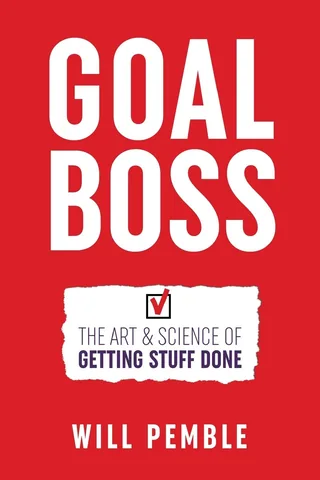
The first two questions of the Goal Boss method settle it: what is the goal, and who is the leader? One named executive owns the program and its goal, which should be a business result rather than a usage target. Each team whose work is changing needs a named leader too, and in practice that is its manager, who carries the weekly cadence. Technology and HR both have essential parts, but a program owned by a committee is owned by nobody.
Questions
What is AI transformation?
AI transformation is the work of changing how an organization decides, works and leads so that AI shows up in results rather than only in usage numbers. BCG's model for it puts 10% of the effort into algorithms, 20% into technology and data, and the remaining 70% into people, organization and processes.
How is AI transformation different from digital transformation?
Digital transformation mostly moved existing processes from paper to screens. AI transformation changes who does which task and how decisions get made, so it lands directly on managers and teams. Buying AI tools is the digital part; the transformation is what happens to the work.
How many companies are actually getting value from AI?
More than a year ago, though still not most. In McKinsey's 2026 survey, 37% of respondents attribute at least some earnings impact to AI, about the same as the year before. BCG's September 2026 index of 1,330 executives says nearly half of companies now create real value, up from 2024, when 74% had yet to show tangible value.
Why do AI transformations stall?
Mostly because of people and process rather than the technology. BCG traced about 70% of AI implementation challenges to people and process and 10% to the algorithms. In RAND's interviews, 84% of the industry practitioners named leadership-driven failures as the primary reason AI projects fail.
What role do managers play in AI transformation?
The largest one measured. Employees whose manager actively supports their team's use of AI are 8.7 times as likely to say AI has transformed how work gets done in their organization, and fewer than one in three say their manager does this (Gallup, State of the Global Workplace 2026).
What is the 10-20-70 rule?
It is BCG's guide to where effort should go in an AI program: 10% on algorithms, 20% on technology and data, and 70% on people, organization and processes. It describes how to spend effort. It is a model, not a measured result.
Will AI transformation lead to layoffs?
Many companies are planning for fewer people. Executives in BCG's 2026 index expect a workforce reduction of roughly 10% to 15% by 2030, concentrated in coordination and middle-management layers. Challenger counted 120,136 announced US job cuts citing AI through September 2026, about 21% of all cuts.
How long does an AI transformation take?
It does not finish, because the tools keep changing. Run it as repeated 90-day cycles instead of a five-year plan: each quarter's audit, experiments and debrief decide what the next quarter does.
Who should lead AI transformation?
One named executive owns the program, and the frontline managers carry it. A program owned by a technology team measures licenses, and one owned by a committee is owned by nobody. What decides whether the work changes is whether each team's manager leads the change.
Find out where your transformation will stall
The free AI readiness assessment scores a team across the five areas that decide whether a rollout lands, people first, in four minutes. If you are running a transformation now, tell us the function, the tool and the date.
Sources
- BCG, "AI Is Starting to Pay Off," Applied AI Index 2026, press release, September 30, 2026. bcg.com/press/30september2026-ai-starting-to-pay-off-companies-generate-value
- BCG, "The Formula for Agentic AI Value," September 30, 2026. bcg.com/publications/2026/the-formula-for-agentic-ai-value
- BCG, "AI Adoption in 2024: 74% of Companies Struggle to Achieve and Scale Value," October 24, 2024. bcg.com/press/24october2024-ai-adoption-in-2024-74-of-companies-struggle-to-achieve-and-scale-value
- McKinsey, "The state of AI in 2026: On the road to ROI," August 25, 2026. mckinsey.com/capabilities/quantumblack/our-insights/the-state-of-ai
- IBM, "IBM Study: CEOs Double Down on AI While Navigating Enterprise Hurdles," May 6, 2025. newsroom.ibm.com/2025-05-06-ibm-study-ceos-double-down-on-ai-while-navigating-enterprise-hurdles
- Gallup, State of the Global Workplace 2026. gallup.com/workplace/349484/state-of-the-global-workplace.aspx
- Gallup, "AI's Effect on Workplace Culture," August 16, 2026. gallup.com/workplace/712976/ai-effect-workplace-culture.aspx
- Mercer, Global Talent Trends 2026, press release. mercer.com/about/newsroom/mercer-s-global-talent-trends-2026-report/
- Ryseff, De Bruhl and Newberry, "The Root Causes of Failure for Artificial Intelligence Projects," RAND, 2024. rand.org/pubs/research_reports/RRA2680-1.html
- Challenger, Gray & Christmas, September 2026 Job Cuts Report. challengergray.com/wp-content/uploads/2026/10/Challenger-Report-September-2026.pdf