AI rollouts
AI adoption strategy: why usage stalls after rollout, and what moves it
This page is for the leader whose organization bought the tools and is still waiting for people to use them.
An AI adoption strategy is the plan for getting people to use AI in their actual work, not just for buying it. Most rollouts stall at the people layer: 47% of US employees say their organization has integrated AI tools, but only 25% say it has communicated a clear plan.
The variable that moves usage most is the frontline manager. Adoption is decided team by team, by whether the person each team reports to visibly backs the change.
Why your AI usage numbers are low
of US employees say their organization has integrated AI tools. 15% use AI daily.
Gallup, May 2026Leaders use AI frequently at twice the rate of the individual contributors they manage, 33% against 16%.
Gallup, June 2025The gap between buying AI and using it opens in the same place in nearly every organization. Leadership adopts early, sees the value, and assumes the rest of the company will follow. BCG's 2025 survey of more than 10,600 people called the result a silicon ceiling: more than three quarters of leaders and managers used generative AI several times a week, while regular use among frontline employees stalled at 51%.
The people who have not adopted are rarely confused about the tools. Most have never heard a plan, many are not sure using AI is welcome, and a growing share are worried about what it means for their jobs. Those are leadership problems, and a license does not touch them.
The manager is the variable you control
Gallup's State of the Global Workplace 2026 found that, inside US organizations investing in AI, employees who strongly agree their manager actively supports their team's use of AI are 8.7 times as likely to say AI has transformed how work gets done in their organization. In an earlier wave of more than 19,000 employees, manager support more than doubled the likelihood of using AI a few times a week or more, and only 28% of employees strongly agreed their manager provided it.
BCG found the same thing from a different angle: the share of employees who feel positive about generative AI rose from 15% to 55% with strong leadership support.
In most organizations that variable is entirely unmanaged, and it is the one you personally control.
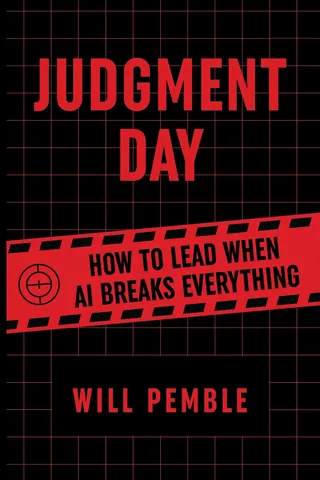
Judgment Day, chapter 3
Active support is concrete. A manager who uses the tools where the team can see it, shares what worked and what did not, asks in the weekly meeting what people tried, and protects time for experiments is supporting adoption. A manager who forwards the launch email is not.
Why training alone can make it worse
The usual answer to low adoption is more training, and on its own it can backfire. Gallup's 2026 analysis found that workers who use AI daily or several times a week are more than twice as likely as occasional users to expect their job to be eliminated within five years. People who learn what the tools can do also learn what that might mean for them.
Gallup also found what weakens that link: well-structured management, and the sense that the organization cares about the people doing the work. Teach the tool without addressing the implication and you produce a workforce that is more skilled and more frightened than when you started. Pair every session with an honest conversation about what the organization intends to do with the capability people are building.
Hidden AI use is a trust signal, not just a policy breach
Low official usage often hides real usage. Microsoft's 2024 Work Trend Index found that 78% of people using AI at work brought their own tools. Slack's 2024 survey of more than 17,000 desk workers found 48% uncomfortable admitting AI use to their manager, most often because it felt like cheating or might make them look less competent or lazy. Workers comfortable discussing AI with their manager were 67% more likely to have used it.
A ban drives that use further out of sight. Treat it as information instead. If two people are using the same tool, you have a test group. If twenty are, you may already have an accidental company standard. Set clear rules on which data can go into which tools, then bring the use into the open where people can learn from each other.
When usage is hidden, people assume they are the only one struggling. When it is visible, they feel part of a movement.
Judgment Day, chapter 8
What managers can say when they cannot promise jobs
Adoption asks people to get good at something that may change their role, and most managers cannot promise that the role will survive. Reassurance a manager cannot back loses the room the first time reality contradicts it. What a manager can do is say what they know, what they do not know, and when they will know more, and then keep three promises: people hear about changes from them first, real budget goes to their skills while they are still here, and if a role goes away they work the internal market for that person. The longer version is on our page about AI change management.
A 90-day AI adoption plan
Audit
Count what is actually in use, sanctioned or not, and ask people directly what they believe the tools mean for their jobs. Aggregate the answers and never let an individual response reach a manager. Find out which managers already back the change and which are waiting it out.
Arm the managers
Start with them, before the next round of employee training. Give them language for the job conversation, a short list of uses to try with their teams, and permission to say what they do not know.
Experiment
Pick a few real tasks per team and test AI against a metric that matters, on a fixed clock. Decide in advance what you expect to learn, and write down what happened.
Debrief
What did we learn, what will we keep, and what will we stop? Scale what worked, change what nearly worked, retire the rest, and start the next 90 days from there.
The AI readiness assessment is a free starting point for the audit, and the operating method behind the plan is on one page.
Measure adoption, usage and outcomes every week
Put three numbers on each team's scoreboard and review them in the regular weekly meeting rather than a separate AI review:
- Adoption. The share of the team that has tried AI on real work.
- Usage. How often and how deeply they use it. Intermittent use usually means friction or a lack of trust.
- Outcomes. Whether the results the rollout was meant to move have moved.
Use the numbers to trigger questions, never punishment. When a team's usage falls, the fastest way to find out why is to ask the team in the meeting, and that conversation is adoption work in itself.
Questions
What is an AI adoption strategy?
An AI adoption strategy is the plan for getting people to use AI in their actual work, as opposed to the plan for buying and deploying the tools. It covers who leads the change on each team, what employees are told about their jobs, how people learn, and how the organization measures whether usage and results actually moved.
Why aren't employees using the AI tools we bought?
Usually because nobody they report to is visibly using or backing them. Leaders use AI at work far more often than the people they manage, most employees have never been told a clear plan, and many are worried about what the tools mean for their jobs. Each of those is a management problem, and none is fixed by a better license.
What role do managers play in AI adoption?
The largest one measured. Employees whose manager actively supports their team's use of AI are 8.7 times as likely to say AI has transformed how work gets done in their organization (Gallup, State of the Global Workplace 2026). Gallup also found manager support more than doubled the likelihood of using AI a few times a week or more.
Does AI training increase adoption?
It increases skill, which is not the same thing. Gallup found that frequent AI users are more than twice as likely as occasional users to expect their job to be eliminated within five years. Training that ignores that implication produces people who are more capable and more frightened. Pair it with an honest conversation about what the organization plans to do with the skills.
Why do employees hide their AI use?
Mostly out of fear of how it looks. In Slack's 2024 survey of more than 17,000 desk workers, 48% were uncomfortable admitting to their manager that they used AI, most often because it felt like cheating or might make them look less competent or lazy.
Should we ban unsanctioned AI tools?
Banning them usually drives the use further out of sight. Microsoft found that 78% of AI users at work brought their own tools in 2024. Treat unsanctioned use as information: it shows you where people already found value, and two people using the same tool are a ready-made test group. Then set clear rules on what data may go into which tools.
How do you measure AI adoption?
Track three numbers weekly: adoption (who has tried it for real work), usage (how often and how deeply), and outcomes (whether the business results moved). Intermittent usage usually means friction or a lack of trust, so a falling number is a reason to ask questions rather than to apply pressure.
How long does AI adoption take?
Longer than the deployment, and it never fully ends, because the tools keep changing. Work in 90-day cycles: audit, prepare the managers, run small experiments, and debrief. Each cycle ends with a decision about what to scale, change or stop.
Who should own AI adoption in a company?
One named leader for the program and one named leader on every team whose work is changing. In practice the second role belongs to the frontline manager. Adoption owned by IT alone tends to measure licenses, and adoption owned by a committee is owned by nobody.
See where your adoption is stuck
The free AI readiness assessment takes four minutes and scores a team across the five areas that decide whether a rollout lands. No account, and your answers stay anonymous.
Sources
- Gallup, State of the Global Workplace 2026. gallup.com/workplace/349484/state-of-the-global-workplace.aspx
- Gallup, "Organizational AI adoption jumps six points," May 2026 survey. gallup.com/workplace/712736/organizational-adoption-jumps-six-points.aspx
- Gallup, Global Indicator: Artificial Intelligence. gallup.com/699797/indicator-artificial-intelligence.aspx
- Gallup, "Manager Support Drives Employee AI Adoption," November 2025. gallup.com/workplace/694682/manager-support-drives-employee-adoption.aspx
- Gallup, "AI Use at Work Has Nearly Doubled in Two Years," June 2025. gallup.com/workplace/691643/ai-use-work-nearly-doubles-two-years.aspx
- Makridis, C., "Using AI More Does Not Reassure Workers, Managers Do," Gallup, September 9, 2026. gallup.com/workplace/713231/ai-not-reassure-workers-managers-do.aspx
- BCG, "AI at Work 2025: Momentum Builds, but Gaps Remain," June 26, 2025. bcg.com/publications/2025/ai-at-work-momentum-builds-but-gaps-remain
- Salesforce, Slack Workforce Index, "AI adoption slows," 2024. salesforce.com/news/stories/ai-adoption-slows-statistics/
- Microsoft and LinkedIn, 2024 Work Trend Index, May 8, 2024. blogs.microsoft.com/blog/2024/05/08/microsoft-and-linkedin-release-the-2024-work-trend-index-on-the-state-of-ai-at-work/
- Pew Research Center, "About 1 in 5 U.S. workers now use AI in their job," October 6, 2025. pewresearch.org/short-reads/2025/10/06/about-1-in-5-us-workers-now-use-ai-in-their-job-up-since-last-year/