AI value creation for the companies in your portfolio
Your portfolio companies are being asked for an AI plan, and most have nobody on staff who can both write one and build it. Goal Boss sits with a company's senior experts, learns how they get results, and builds AI systems that do most of that work. The first one is live and measured within 90 days.
The systems Will Pemble has built for clients save about 80% of the work and 90% of the time it takes to reach the same result.
This work fits funds whose companies have 100 to 2,000 people and no AI team of their own.
One company, 90 days
What the sponsor and the CEO hold at week 13
- A working system in daily use
- A result measured against a written baseline
- Managers who can run it and extend it
- A ranked list of what to build next
One operator does the whole job
Will Pemble built and sold Web.com, one of the largest web hosts on earth. He has been a full-stack engineer since 1995 and has worked with AI and machine learning since 2018.
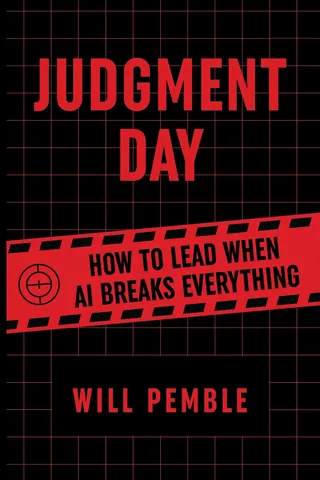
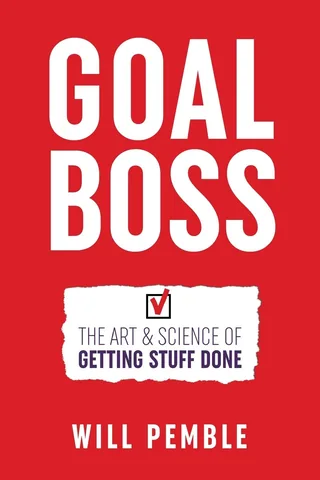
For over twenty years he has also worked with owners and leadership teams on getting people to do the work that moves the number. Two books came out of it, Goal Boss: The Art and Science of Getting Stuff Done and Judgment Day: How to Lead When AI Breaks Everything.
Because he builds the systems himself, there is no handoff between the firm that wrote the strategy and whoever is supposed to build it. That handoff is where most AI plans stall.
His AI client work from the last two years is under confidentiality agreements, so no clients are named here. Recommendations from earlier clients and colleagues are on LinkedIn.
What stalls AI at a company of 300 people
The technology is rarely the obstacle at a company this size.
Nobody owns the result
The CEO hands AI to IT, IT buys licenses, and no operating leader has a number attached to what those licenses were supposed to change.
The plan and the build are separate purchases
A strategy firm writes the roadmap and leaves. The company then has to find, hire or contract someone to build it, and months pass before anything runs.
The tool ships and usage stays flat
Nobody redesigned the job around the system, and the managers were never told what to say to the people it affects. BCG puts about 70% of AI implementation challenges in people and process.
BCG, October 2024The hold period keeps running
A year of pilots uses up a fifth of a five-year hold.
Four ways to start
Half a day, all of your CEOs
A portfolio working session
Goal Boss runs it at your annual meeting or as a day of its own. Each CEO leaves with three candidate workflows for their own company, ranked by annual value, and a view on which to start with. You leave knowing which companies are ready to move.
One week on site, one company
An AI opportunity assessment
Goal Boss spends five days at the company, learns how its senior experts get results, and ranks every candidate workflow by annual value and by how hard it is to change. On Friday afternoon the leadership team gets the report in person: the ranked list, a specification for the first build, and a read on whether the managers are ready to run it. The fee is fixed, and the report is theirs whether or not we go further.
One quarter, one function
A 90-day sprint
Goal Boss builds the first system around how the company's experts work, gets it adopted, and measures the result against a baseline written down in week one. The sprint has one accountable leader at the company and a fixed fee.
One to two weeks, before you close
AI diligence on a target
Goal Boss assesses what AI is likely to do to the target's revenue and cost base over your hold period, how much of its own AI is real, and what the management team can absorb. The report is written for the investment committee and becomes the AI section of the first 100 days.
How the assessment week runs
The company has the report in its hands before the week ends, and your operating partner is welcome in the room on Friday.
- Before the week
Prepare
The company sends a data export from a short request list, books the interview calendar, and has its managers take the four-minute readiness assessment.
- Monday
The room
The week opens with three hours with the four to eight people who run the function. Senior experts who know the work sit next to the executives who know the strategy.
- Tuesday to Thursday
The work
Goal Boss interviews the people who do the work, watches it get done, and sizes each workflow against the company's own numbers.
- Friday
The report
The leadership team receives the report in person that afternoon, with a recommendation it can act on the same day.
How the 90 days run
- Weeks 1 to 2
Find
Goal Boss sits with your senior experts and learns exactly how they get results, then reads the numbers behind the work. Every candidate workflow gets ranked by annual value and by how hard it is to change, and the baseline for the first one is written down.
- Weeks 3 to 8
Build
Will Pemble builds the first system himself, on your data and inside your security rules, around the way your experts already work. They see it early and correct it.
- Weeks 5 to 12
Adopt
Managers get the system before their teams do, along with language for the conversation about what it changes. The job gets redesigned around the tool, and a weekly review keeps it in use.
- Week 13
Measure
The result is measured against the baseline from week one. You keep the system, the scorecard, and a ranked list for the next sprint.
The method in full, on one pageWhy AI projects failWhat AI transformation actually takes
Questions sponsors ask
- Who pays?
- The portfolio company pays for an assessment or a sprint, usually on the sponsor's introduction. The sponsor pays for a portfolio working session or for diligence on a target.
- We already have an operating partner for technology or AI. Where do you fit?
- Goal Boss works as that person's delivery capacity at one company at a time, which frees them to cover the rest of the portfolio. They set the priorities and see the same weekly scorecard the CEO sees.
- What kind of company is the best fit?
- Companies with roughly 100 to 2,000 people whose product is the judgment of experienced people. That covers professional services, insurance and financial services, healthcare administration, outsourced business services and IT services.
- What happens to the experts once the system is running?
- The system does most of the repeatable work, which leaves their time for the judgment calls only they can make. They review what it produces and stay accountable for the result.
- What do we see while the work is under way?
- You get a one-page scorecard every week. It shows what was built, who is using it, and where the number stands against the baseline.
- Where are you based?
- Goal Boss is in Brookfield, Connecticut, and Will Pemble travels to the company, anywhere in the United States.
Send us one company
Tell us the company, the function you have in mind, and what you need from it during the hold. If we do not think we can move the number, we will say so on the first call.