AI rollouts
AI change management starts with your managers
This page covers what the evidence says about leading people through an AI rollout, what to tell a team when you cannot promise anyone their job, and a framework that runs in 90 days.
AI change management is the work of getting people to actually change how they work when AI arrives: managers who visibly back it, honest answers about what happens to jobs, and short cycles of experiments and debriefs.
The evidence points at one lever above the rest. Employees whose manager actively supports their team's use of AI are 8.7 times as likely to say AI has transformed how work gets done in their organization, and fewer than one in three say their manager does it.
Two things people mean by AI change management
Half the pages written on this subject are about using AI tools to run change programs: chatbots for internal communication, sentiment dashboards, scenario models. The other half are about managing the human side of an AI rollout, which is the harder problem and the one this page covers.
A word of caution on the first meaning. Tools that infer how employees feel from their messages or their faces are not a shortcut. Inferring emotions in the workplace is a prohibited practice under Article 5 of the EU AI Act, outside narrow medical and safety uses, and it is the fastest way to lose a team's trust anywhere. Ask people directly and let them answer.
Why AI rollouts stall
of US employees say their organization has communicated a clear plan for integrating AI, as of May 2026.
Gallupof employees say leaders underestimate AI's emotional impact. 19% of HR leaders consider it in their implementation strategy.
Mercer, 2026The pattern in these numbers is a rollout that buys the tools and skips the people. Most organizations have no plan their employees can see, the people being asked to adopt the tools are increasingly worried about what the tools mean for them, and the leaders running the rollout mostly have not noticed. Prosci's research on AI transformations, from a survey of 1,107 professionals, put 63% of implementation challenges in human factors rather than technical limitations.
Nothing about this is a technology failure, and a technology fix will not touch it. For the failure statistics themselves, and which of them hold up, see why AI projects fail.
Managers are the lever
Gallup's State of the Global Workplace 2026 found that, inside US organizations investing in AI, employees who strongly agree their manager actively supports their team's use of AI are 8.7 times as likely to strongly agree that AI has transformed how work gets done in their organization, and 7.4 times as likely to say it gives them more chances to do what they do best. Fewer than one in three employees in those organizations say their manager does this.
BCG found the same effect from a different direction. In its 2025 survey of more than 10,600 people, the share of employees who felt positive about generative AI rose from 15% to 55% with strong leadership support, and only about a quarter of frontline employees said they got it.
The largest single variable in whether an AI rollout works is not the model, the budget or the vendor. It is whether the person a team reports to shows up and leads the change.
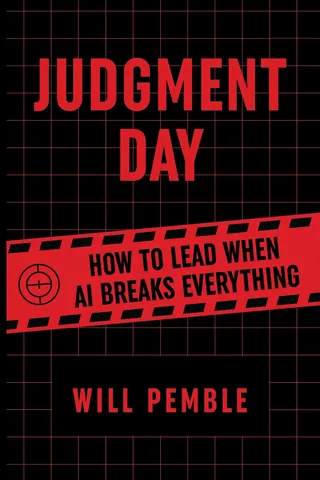
Judgment Day, chapter 3
Most rollout budgets go to licenses and training. Almost none goes to the manager, who is the one variable the organization actually controls.
Why training alone raises the fear
The standard prescription for resistance is more training, and the 2026 data says it does not work the way people assume. Gallup tracked workers across four survey waves and found that those who use AI daily or several times a week are more than twice as likely to expect their own job to be eliminated within five years as those who use it a few times a month. The more fluent people get, the clearer the implication becomes.
What changed the picture was management. Gallup found that the link between AI use and fear of job loss weakened among employees exposed to well-structured management practices. So the rule we use is simple: pair every training session with an honest conversation about what the organization intends to do with the capability people are being asked to build.
What to say when you cannot promise anyone their job
Nearly every piece of advice on this subject assumes a reassuring message is available. Usually it is not. A manager in the middle of an organization will spend whole quarters unable to promise anyone their job or the shape of their role, and unable to speculate about either.
Never trade a comforting sentence today for your credibility next quarter.
Judgment Day, chapter 9
Say what you know, what you do not know, and when you will know more. Then make the three promises a manager can actually keep:
- People hear about changes from you before they hear about them anywhere else.
- Real budget goes to their skills while they are still here, not after a decision is made.
- If a role goes away, you work the internal market for that person as hard as you would for yourself, and you put that in writing.
The full argument is in Stop reassuring your team about AI.
A 90-day AI change management framework
Long transformation plans assume the ground holds still for three years. With AI it moves every few months, so we work in 90-day cycles and let each one decide the next.
Audit
Find out what you actually have. Which tools are in use, including the unsanctioned ones, what people believe about their own jobs, and where each manager stands. Ask people directly, aggregate the answers, and never let an individual's response reach their manager.
Arm the managers
Start with them, before anyone else. They need language for the hard conversation rather than a tool demo, and permission to say what they do not know.
Experiment
Run small tests against metrics that matter, on a fixed clock, with a written record of what was tried and what it produced. Decide before you start what you expect to learn.
Debrief
Three questions: what did we learn, what will we keep, and what will we stop? Every experiment ends in a decision to scale it, change it or retire it, and the next sprint starts from there.
The AI readiness assessment is the audit's starting point, scored across leadership awareness, team literacy, tools, risk and execution cadence.
How to measure AI change
Put three numbers on the team's weekly scoreboard and review them in the same meeting as everything else the team is accountable for.
- Adoption. The share of people who have tried the tool for real work.
- Usage. How often and how deeply they use it. Intermittent use usually signals friction or a lack of trust.
- Outcomes. Whether the business results the rollout was supposed to move actually moved.
Use the numbers to start a conversation, never to punish. A team whose usage is falling is telling you something, and the fastest way to find out what is to ask. One more benchmark worth taking to your own people: ask them whether the organization has communicated a clear plan for AI. Nationally, a quarter say yes.
Who owns AI change management
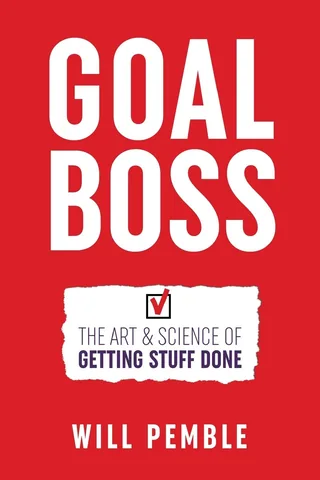
Two questions settle it, and they are the first two questions of the Goal Boss method: what is the goal, and who is the leader? A rollout needs one named owner for the program, and a named leader on every team whose work is changing. In practice the second role belongs to the frontline manager, who carries the weekly cadence. HR, IT and a transformation office all have a part, but a program owned by a committee is owned by nobody.
Questions
What is AI change management?
AI change management is the work of getting people to actually change how they work when AI arrives, rather than just giving them access to it. It covers how leaders explain the change, what managers say about jobs, how teams learn the tools, and how the organization measures whether the work itself changed.
How is AI change management different from traditional change management?
Three things are different. The change does not end, because the tools improve every few months. The people being asked to adopt it are often the ones most worried it will replace them. And leaders usually cannot promise the outcome that traditional change programs lean on, which is that everyone's job is safe.
What role do managers play in AI adoption?
The largest one measured. Employees whose manager actively supports their team's use of AI are 8.7 times as likely to say AI has transformed how work gets done in their organization, and fewer than one in three employees say their manager does this (Gallup, State of the Global Workplace 2026).
How do I talk to employees about AI and their jobs?
Say what you know, what you do not know, and when you will know more, then meet that date even if the answer has not changed. Promise only what you control: that people hear about changes from you first, that real budget goes to their skills while they are still here, and that if a role goes away you will work the internal market for that person.
Does AI training reduce employee anxiety?
Not on its own. Gallup found that workers who use AI frequently are more than twice as likely as occasional users to expect their job to be eliminated within five years. What reduced that link was well-structured management. Pair every training session with an honest conversation about what the organization intends to do with the skills people are building.
What framework works for AI change management?
A short cycle beats a long plan. We use a 90-day readiness sprint: audit what is actually in use and what people believe about their own jobs, arm the managers first, run small experiments against metrics that matter, and debrief with three questions. What did we learn, what will we keep, and what will we stop?
How long does an AI change management program take?
Plan in 90-day cycles rather than multi-year programs. The tools change faster than a long plan can absorb, so each cycle ends with a debrief and a decision about what to scale, change or stop, and the next cycle starts from there.
How do you measure AI adoption?
Track three numbers every week: adoption (who has tried it), usage (how often and how deeply), and outcomes (whether the business results moved). Intermittent usage usually signals friction or a lack of trust, so treat a falling number as a reason to ask questions rather than to apply pressure.
Do 70% of change initiatives really fail?
No. The figure began as Hammer and Champy's own unscientific estimate in a 1993 book about reengineering, and a 2011 review in the Journal of Change Management found no valid evidence for it. It is now routinely quoted about AI programs without a source.
Start with the number
The free AI readiness assessment takes four minutes and shows where your team's rollout is likely to break, people first. If you are running a rollout now, tell us which function, which tool and when it lands.
Sources
- Gallup, State of the Global Workplace 2026. gallup.com/workplace/349484/state-of-the-global-workplace.aspx
- Gallup, Global Indicator: Artificial Intelligence, updated April 2026. gallup.com/699797/indicator-artificial-intelligence.aspx
- Makridis, C., "Using AI More Does Not Reassure Workers, Managers Do," Gallup, September 9, 2026. gallup.com/workplace/713231/ai-not-reassure-workers-managers-do.aspx
- Mercer, Global Talent Trends 2026, press release. mercer.com/about/newsroom/mercer-s-global-talent-trends-2026-report/
- BCG, "AI at Work 2025: Momentum Builds, but Gaps Remain," June 26, 2025. bcg.com/publications/2025/ai-at-work-momentum-builds-but-gaps-remain
- Prosci, "Why AI Transformation Fails". prosci.com/blog/why-ai-transformation-fails
- Hughes, M., "Do 70 Per Cent of All Organizational Change Initiatives Really Fail?" Journal of Change Management, 2011. doi.org/10.1080/14697017.2011.630506
- Regulation (EU) 2024/1689 (the EU AI Act), Article 5. eur-lex.europa.eu/eli/reg/2024/1689/oj