
Get your AI spend into the operating numbers
Goal Boss is an AI consulting firm that builds what it recommends. It sits with your most experienced people, learns how they get results, and puts AI systems in place that do most of that work. Some are bought, and some are built. Your experts reach the same result in a fraction of the time and keep the judgment calls for themselves.
The first system is in daily use and measured against a written baseline within 90 days, and Goal Boss is accountable for all of it.
How the consulting engagement works. Or start with four minutes and no conversation: the free AI readiness assessment
90-day scorecard
ExampleOne operations team, week 10 of 13
- Expert workflows mapped and ranked by valueDone
- First system live with real usersDone
- Managers running the weekly review5 of 7
- Result measured against the baselineWeek 13
Will Pemble built and sold Web.com, one of the largest web hosts on earth
He has been a full-stack engineer since 1995 and has worked with AI and machine learning since 2018. His background in hosted services and security goes back to Web.com, and Goal Boss builds to SOC 2 standards and runs its own penetration tests.
For over twenty years he has also worked with owners and leadership teams on one problem: getting people to do the work that moves the number. Goal Boss: The Art and Science of Getting Stuff Done, his first book, is that method written down.
Few people can both build a system and lead a room of managers through what it does to their jobs. Judgment Day: How to Lead When AI Breaks Everything, his second book, covers what doing both has taught him.
The last two years of client work are under confidentiality agreements, so this site names no clients.
Most of the return on AI is lost after the software works
The model is rarely what fails. A system gets built, the demo goes well, and then usage stays flat because nobody redesigned the job around it and no manager owns the result.
70%
Of AI implementation challenges come from people and process. Technology accounts for 20% and the algorithms for 10%.
BCG, October 20248.7×
As likely to say AI has transformed how work gets done in their organization, when a manager actively backs AI use.
Gallup, State of the Global Workplace 2026Why AI projects failWhat AI transformation actually takesAI adoption strategy
Where to start
The work always begins with the people whose experience the company runs on. A system built from how they get results gives each of them several times the reach.
One week on site
An AI opportunity assessment
Monday starts with three hours in a room with the four to eight people who run the function, senior experts included. Goal Boss spends the week in interviews and watching the work, and finds the five best opportunities for improvement. On Friday afternoon your leadership team receives the report in person: the five opportunities ranked by annual value, a recommendation to buy or build each one, and a read on whether your managers are ready to run the first. The fee is fixed, and the report is yours whether or not we go further.
One quarter
A 90-day sprint in one function
A sprint takes one or two of the five opportunities. Goal Boss puts each in place, bought or built, gets it adopted, and measures the result against a baseline written down in week one. The fee is fixed.
Half a day, for a fund's CEOs
A portfolio working session
Goal Boss runs it at a sponsor's annual meeting or as a day of its own. Each CEO leaves with three candidate workflows for their own company, ranked by annual value, and a copy of Judgment Day.
One to two weeks, before a deal closes
AI diligence on a target
What AI is likely to do to the target's revenue and cost base over the hold, how much of its own AI is real, and what the management team can absorb. Written for the investment committee.
The conversation your managers will have to have
99% of executives expect AI to cause at least some headcount reduction within two years, and 32% believe their workforce can optimally combine human and machine capabilities. The people who report to your managers have read the same headlines, and what a manager says when asked decides whether the new system gets used. Preparing managers for that conversation is part of every sprint.
Mercer, Global Talent Trends 2026How the 90 days run
Every workflow gets one of three answers: buy a product, build a system, or do both. Whichever it is, the result depends on process, teamwork, adoption and communication, and those get as much of the 90 days as the software does.
- Weeks 1 to 2
Find
Goal Boss sits with the experts behind the one or two opportunities chosen, documents exactly how they get results, and measures the baseline.
- Weeks 3 to 8
Buy or build
Where a product already does the job, the company buys it and Goal Boss integrates it. Where none does, Will Pemble builds the system on your data. Either way it is held to SOC 2 standards, and your experts see it early and correct it.
- Weeks 5 to 12
Adopt
Managers get the system before their teams do, along with language for the conversation about what it changes. The job gets redesigned around the tool, and a weekly review keeps it in use.
- Week 13
Measure
The result is measured against the baseline from week one. You keep the system, the scorecard, and a ranked list for the next sprint.
The method in full, on one pageHow we approach AI change managementAI training for employees
Where the method comes from
The first book
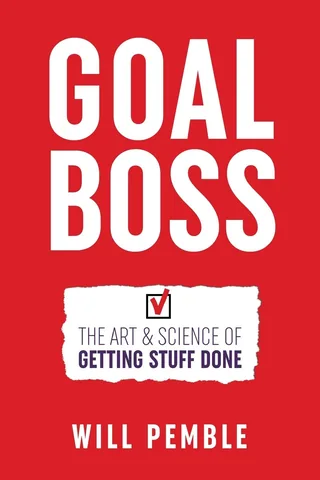
Goal Boss
The Art and Science of Getting Stuff Done
This is the method underneath everything here: clear goals, named owners, visible metrics, a weekly cadence that holds, and the two questions that start every conversation.
The new book
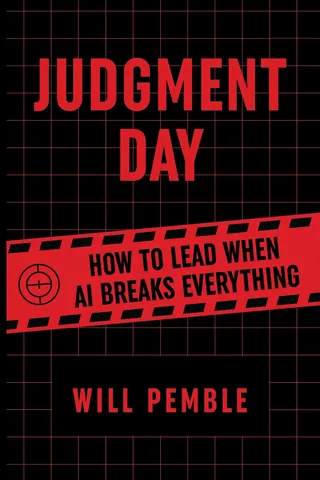
Judgment Day
How to Lead When AI Breaks Everything
It is a field manual for the person who has to run a team through this. It covers what AI breaks first, how to organize for ground that moves every ninety days, and what to say when you cannot promise anyone their job.
If AI is changing your own job
Your job is not one thing, so it does not get one answer
Whole occupations rarely vanish at once. Individual tasks move all the time, in different directions. These pages and tools are free, need no account, and store nothing you enter.
Have a function in mind?
Tell us which function, what it costs you today, and when you need a result. If there is nothing useful we can do, we will say so.


