
Who said it, what it means
The short answer
Jacob Coxon is an AI researcher who worked at OpenAI and then Anthropic, and who resigned on 10 September 2026 with a public warning that the race to build superintelligence could end in human extinction. His statement reached a reported 165 million views. He argued that a sufficiently advanced intelligence will be capable of killing us and that competition between labs is the mechanism driving it there.
He also said that today's AI products are safe for ordinary everyday use. That qualification is real, it is his, and most of the coverage dropped it.
On the record
"If you have a super advanced intelligence … it will be smart enough to kill us."
Jacob Coxon, quoted by CBS News, 10 September 2026.
"I think, basically, the whole problem is that there is a race."
His argument is structural rather than technical. No individual lab has to be reckless for the outcome to be bad; it is enough that each one is racing the others and that safety work is the thing that slips when you are behind.
Jacob Coxon, quoted by CBS News.
Coxon said current AI platforms do not pose an imminent threat and that the technology is safe to use day to day. The warning is about a trajectory, not about the tool your team opened this morning. Anyone citing him to argue that people should stop using AI today is citing him against what he said.
Reported by CBS News.
The argument around it
Evan Hubinger, an alignment science lead at Anthropic, put the chance of AI killing all humans within the next decade at greater than 10 percent. That figure is Hubinger's, not Coxon's, and the two are frequently merged in summaries of the story.
Reported by Scientific American.
"The current incidents that we've had have generally been security incidents."
Artem Dinaburg of Trail of Bits argued that better security practice is the more attainable place to start. Nidhi Aggarwal of HackerOne made a similar move, treating it as a hard but solvable engineering and oversight problem. Neither says the risk is imaginary. Both say the failures so far look operational rather than existential.
Both quoted by Scientific American.
The company said it maintains some of the strongest safeguards in the industry and is transparent about both benefits and risks, and pointed to its mechanistic interpretability work, the effort to understand what is actually happening inside a model rather than only what it outputs.
Reported by CBS News.
A Fortune reviewer pointed out that the warning does not say what anyone is supposed to do about it. That is not a small gap. A hundred and sixty-five million people read a credible researcher say the technology on their desk is part of a race that might kill everyone, and then got no instruction of any kind.
The part we can answer
We are not going to tell you whether Coxon is right. We have no standing to settle that and neither does anyone selling you a course about it.
What we will say is that the argument has a practical consequence nobody is handling. Someone on your team has now heard that the people who build this believe it might kill everyone. They are not going to raise it in a standup. It will show up instead as a quiet drop in discretionary effort, as your best engineer taking a recruiter call, and as a rollout that stalls for reasons nobody will put in writing.
Four things hold up in that conversation.
Extinction risk and "is my job still here in six months" are different questions with different timescales and different evidence. Your team is usually asking the second one while quoting the first. Name both, then say which one you are able to address.
"Nobody here is going anywhere" costs you everything the first time it turns out to be false. Say what is decided, say what is not decided yet, and give a date when you will know more. Uncertainty stated plainly is survivable. Confidence that collapses is not.
Whether AI is coming for the work your team does is measurable, unlike the extinction argument. There is real evidence on adoption, on displacement, and on what actually happens to people who use these tools heavily. We keep the source behind every number so you can quote it without getting caught out.
The questions your team most needs answered are the ones they will not ask in front of you. Hand them the list instead, and let them bring it to their next one-on-one. It works better than any all-hands on the subject.
Common questions
Jacob Coxon is an AI researcher who worked at OpenAI and then Anthropic, and who resigned from Anthropic on 10 September 2026. He published a warning that the competitive race to build superintelligent AI could end in human extinction. His statement went viral, reaching a reported 165 million views, and drew responses from researchers at both companies.
He said that a sufficiently advanced intelligence "will be smart enough to kill us," and that the root cause is competitive pressure between companies: "I think, basically, the whole problem is that there is a race." He also pointed at the growing connection between AI systems and physical infrastructure, noting that people are already wiring chatbots into household utilities.
No, and this is the part most coverage left out. Coxon said current AI platforms do not pose an immediate threat and that the technology is safe for everyday use. His warning is about where the race leads, not about the tool your team opened this morning. If someone tells you Coxon said to stop using AI, they have not read him.
Coxon himself did not attach a specific probability or date to extinction in the reporting. Evan Hubinger, an alignment science lead at Anthropic, separately put the chance of AI killing all humans within the next decade at greater than 10 percent. Those are two different people making two different kinds of claim, and they are often merged in summaries.
Some do and some reframe the problem entirely. Hubinger at Anthropic agreed and gave the greater-than-10-percent figure. Security researchers pushed back on the framing rather than the seriousness: Artem Dinaburg of Trail of Bits observed that the incidents so far "have generally been security incidents," and argued better security practice is the more attainable place to start. Nidhi Aggarwal of HackerOne put it as a solvable engineering and training problem rather than an extinction one.
Anthropic said it maintains some of the strongest safeguards in the industry, that it is transparent about both the benefits and the risks of its systems, and it pointed to its work on mechanistic interpretability, which is the effort to understand what is actually happening inside a model.
Say what you know, say what you do not know, and say when you will next have more information. Do not open with reassurance you cannot underwrite. The specific thing your team is asking is not whether humanity survives the decade; it is whether their own work still matters in six months, and that is a question you can actually answer with a date attached.
No, and conflating them wastes the one conversation a manager can usefully have. Extinction risk is a research and policy argument playing out over years. Whether AI takes the work your team does is a question about this quarter, it has measurable evidence behind it, and it is the one landing on your desk.
Twenty statements, four minutes, five areas that decide whether a rollout survives contact with the people running it. The flags matter more than the score.
This page describes another person's public statements and links to the reporting it draws on. Goal Boss has no relationship with Jacob Coxon, Anthropic, or OpenAI. Quotes are verbatim from the outlets named. Last reviewed 23 September 2026.
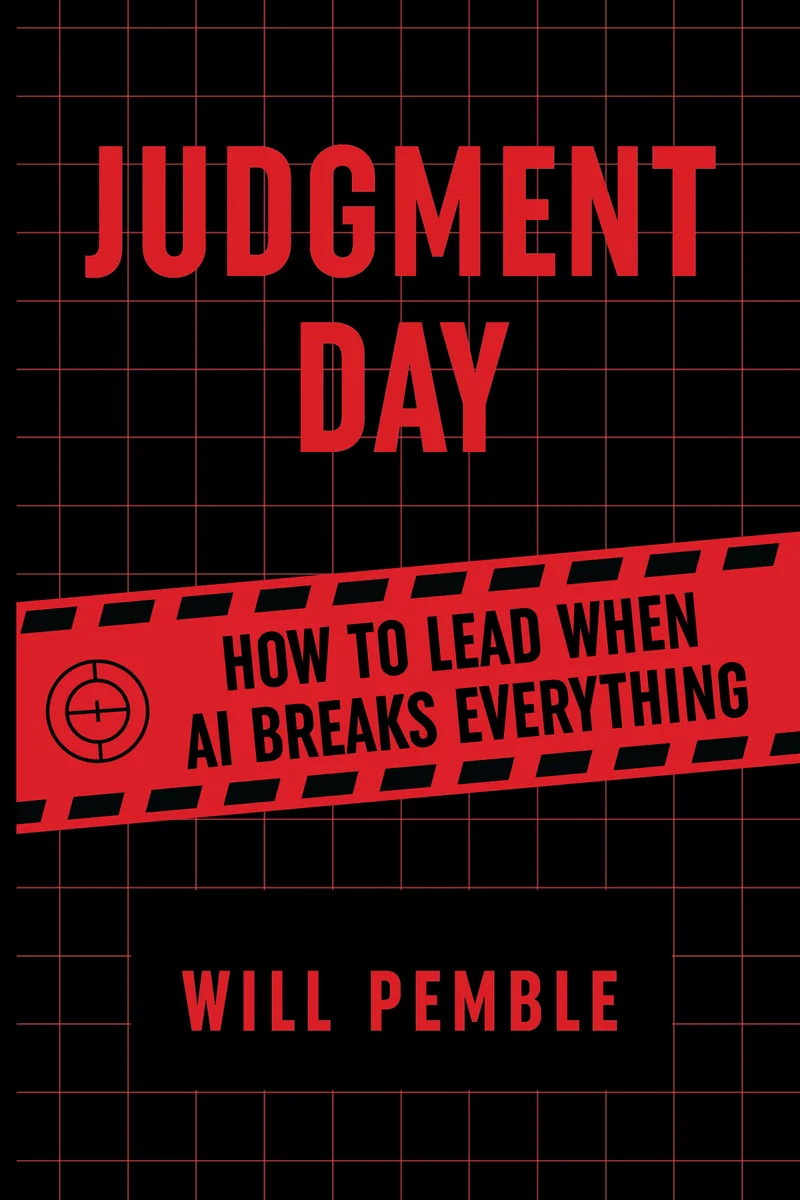
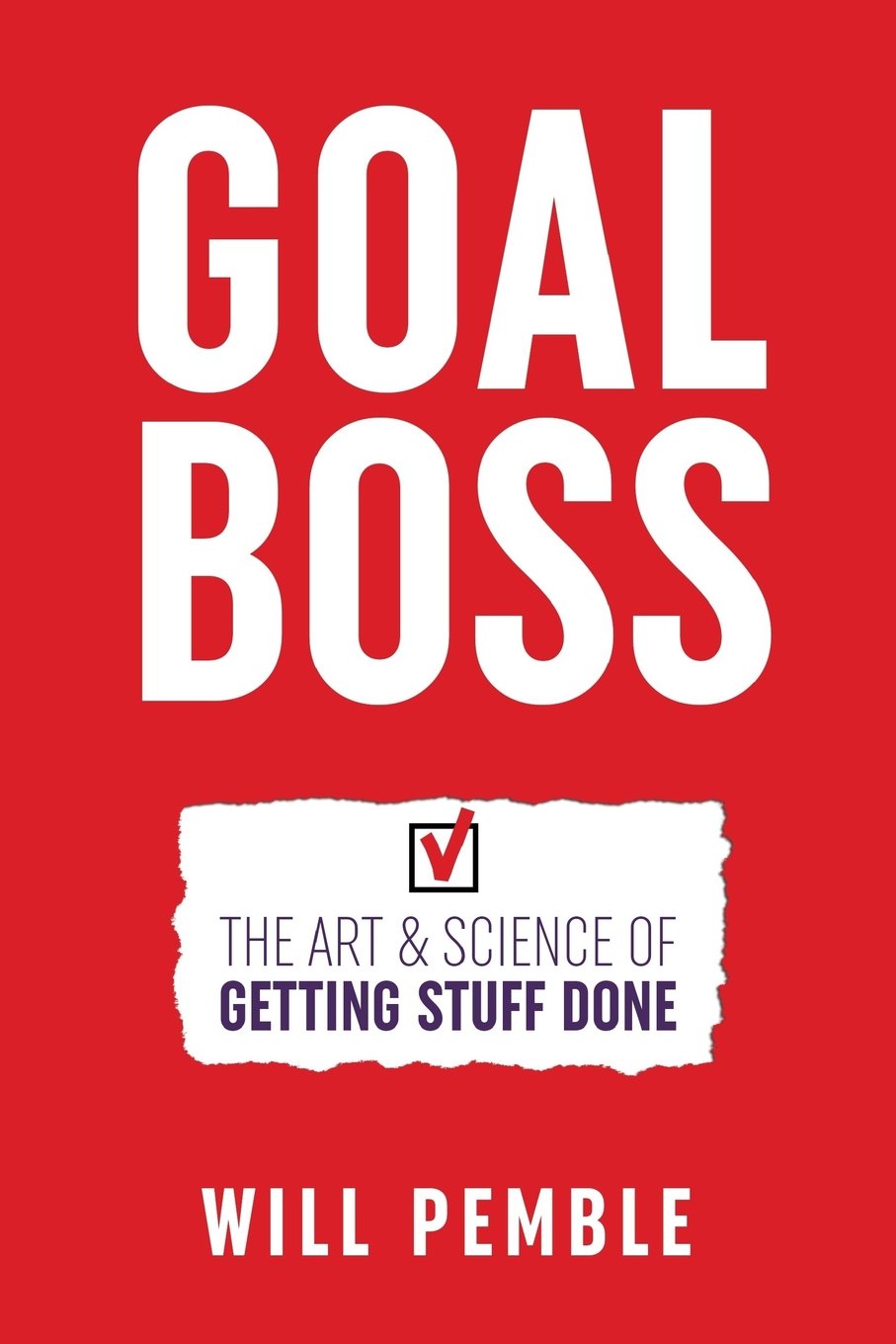
Two books by Will Pemble
Judgment Day is how to lead when AI breaks everything.
Goal Boss is the method underneath it.
Connect with Us:


© 2026 Goal Boss. All rights reserved.
Goal Boss uses cookies to improve your experience, analyze traffic, and provide secure services. By clicking Accept All, you consent to all cookies. By clicking Reject Non-Essential, only strictly necessary cookies will be used. See our Privacy Policy for details.
