Will AI take my job?
This page answers the thirteen questions people actually ask about AI and their own jobs, beginning with that one. Each answer is one sentence. Where the evidence cuts against what you were hoping to hear, it says so.
Last reviewed 4 October 2026
01
Will AI take my job?
Probably not the whole job, and probably not at once. Tasks inside it are moving now, which is a different problem and a more useful one.
The evidence
AI was named as a reason in 120,136 announced US job cuts from January through September 2026, about 21% of all cuts, against 54,836 in the whole of 2025. It was the single most-cited reason every month from March through July and is still the top reason for the year, and the cuts are concentrated rather than general, with technology the dominant sector.
Challenger, Gray & Christmas, September 2026 report.18% of US employees say their job is likely to be eliminated within five years, rising to 23% at organizations that have actually implemented AI. A year earlier the first figure was 15%.
Gallup, 2026. Nationally representative US sample.Capability is arriving as a rising tide rather than a crashing wave. More than 17,000 evaluations by experienced workers, across over 6,000 text-based tasks drawn from the Department of Labor O*NET taxonomy, found little evidence of sudden obsolescence in narrow sets of work and substantial evidence of continuous broad improvement. On tasks that take a person about ninety minutes, models succeeded roughly 60% of the time in mid-2024 and above 70% by late 2025.
MIT FutureTech, Mertens and Thompson, 2026.Most US workplaces have not started. AI adoption among US establishments stood at 22.4% in August 2026, with firms expecting a little under 26% within six months.
Goldman Sachs on Census Bureau Business Trends and Outlook Survey data.What cuts against this
Two things cut against reading the national cut figures as your own risk. AI is a convenient public reason for a reduction decided for other reasons, so some share of that 112,713 would have happened anyway under a different label. And the concentration matters: if you do not work in technology, the headline number is describing somebody else's industry. Against that, a rising tide still reaches you eventually, and it arrives without an announcement.
What to do with this. Stop asking whether AI takes the job and start asking which tasks move first, because that question has an answer you can act on this quarter. Map your own tasks, then ask your manager what is decided and what is not.
02
Do 70% of AI initiatives really fail?
No, and the number is not about AI at all. It traces to one sentence in a 1993 book on business reengineering, and the author who wrote it spent years objecting to how it gets used.
The evidence
The figure originates in a single sentence in Hammer and Champy's 1993 book, which described it as their own estimate rather than a finding.
Hammer, M. and Champy, J. Reengineering the Corporation, 1993. Given in the original as "our unscientific estimate." Primary document.Hammer publicly disowned how the number was being used within two years of publication.
Hammer, M.: "This simple descriptive observation has been widely misrepresented and transmogrified and distorted into a normative statement. There is no inherent success or failure rate for reengineering."A peer-reviewed review traced the five most-cited sources for the 70% claim and found no valid or reliable evidence behind any of them.
Hughes, M. "Do 70 Per Cent of All Organizational Change Initiatives Really Fail?" Journal of Change Management 11(4), 2011, 451-464.What cuts against this
There is real survey data in the neighborhood, and it is not this claim. McKinsey's 2018 global digital transformation survey found fewer than 30% of transformations succeeded on its own measure, roughly 16% where digital technologies were involved, and up to 26% in digitally savvy industries. That is a disclosed survey with a date, and it predates generative AI entirely.
What to do with this. When somebody quotes 70% at your AI program, ask where it comes from. Cite the 2018 McKinsey transformation survey with its date instead, or say most transformations disappoint and skip the number. Anyone quoting 70% as research is repeating a guess from 1993 about a different subject.
03
Should I learn to use AI, or will that just speed up my replacement?
Learn it. Expect to become more worried rather than less, because fluency is what lets you see what is coming.
The evidence
Workers who use AI frequently are more than twice as likely to expect their job to be eliminated within five years as workers who use it rarely.
Gallup, State of the Global Workplace 2026. Nationally representative US sample.18% of US employees expect their job to be eliminated within five years by automation or AI. At organizations that have actually implemented AI, that rises to 23%.
Gallup, Q1 2026.What to do with this. Fluency and fear rise together, and that is not a paradox. Someone who becomes genuinely good with a capable tool can see what it will handle next year. The fear is information. The people who can see it coming are also the ones positioned to move first.
04
How many people have actually lost jobs to AI?
In announced US job cuts, AI was the employer's stated reason for 120,136 cuts from January through September 2026. That is a count of what employers said, not of what happened.
The evidence
AI was cited in 120,136 announced US job cuts through September 2026, against 54,836 for all of 2025 and about 192,000 cumulatively since tracking began in 2023. The month-by-month series is on our <a href="/ai-layoffs-2026">AI layoffs 2026 tracker</a>.
Challenger, Gray & Christmas, monthly job cut reports, 2026. Tracks employer-stated reasons in public announcements.AI was the single most-cited reason for announced US job cuts every month from March through July 2026. It fell to fourth in August and fifth in September, and remains the top reason for the year to date.
Challenger, Gray & Christmas, September 2026 report.What cuts against this
Two limits are worth stating. These are announcements with self-reported reasons, and employers have incentives in both directions: attributing cuts to AI sounds strategic to investors, while attributing them to demand sounds less alarming to staff. The totals are also heavily concentrated in technology, so they are a poor guide to what is happening in insurance, healthcare administration or manufacturing.
What to do with this. The number is real and it measures disclosure rather than causation. Use it to show the trend is not hypothetical, not to estimate how many jobs AI has actually eliminated.
05
What percentage of companies have actually adopted AI?
It depends entirely on what counts as adoption. Fewer than 19% of US establishments on the Census-based measure, and 88% of companies on the self-report measure.
The evidence
Fewer than 19% of US establishments had adopted AI as of March 2026, projected to reach 22.3% within six months.
Goldman Sachs AI Adoption Tracker, March 2026, built on US Census Bureau establishment survey data.88% of companies reported using AI regularly in at least one function, while only about a third had begun scaling at enterprise level and two thirds remained in testing or proof of concept.
McKinsey, The State of AI, 2025. Self-reported executive survey.What cuts against this
These two numbers are not in conflict, and the gap between them is the useful part. One asks whether an establishment has adopted AI as a business practice. The other asks whether anyone at a company has used a tool. A single enthusiastic employee with a chatbot subscription satisfies the second and not the first.
What to do with this. When anyone quotes you an AI adoption rate, ask what counts as adoption before you react to the number. The four-fold spread here is definitional, not empirical.
06
What actually predicts whether an AI rollout works?
The strongest predictor is whether the frontline manager visibly backs it. It is the largest identified variable and the least managed one.
The evidence
Employees whose manager actively supports their team's use of AI are 8.7 times as likely to strongly agree that AI has transformed how work gets done in their organization.
Gallup, State of the Global Workplace 2026.Fewer than one in three employees strongly agree that their manager actively supports AI use.
Gallup, 2026.The two strongest drivers of frequent AI use are integration with existing systems and manager-led adoption.
Gallup, 2026.What to do with this. An 8.7x effect sitting on a behavior fewer than a third of managers exhibit is the largest unexploited gap in the field. Most rollout budgets go to licenses and training. Almost none goes to the manager conversation.
07
Does AI training reduce employee anxiety?
No. On the available evidence it raises anxiety. Train anyway, and pair it with an honest conversation about intent.
The evidence
Frequent AI users are more than twice as likely to expect job elimination within five years as infrequent users, which means literacy tracks with fear rather than against it.
Gallup, 2026.Roughly one third of workers report that their employer has given them adequate AI training.
Gallup, reported 2026.What to do with this. The standard remedy for AI anxiety is AI training, and the evidence says training reveals the problem rather than resolving it. Teach the tool without addressing what the organization intends to do with the capability, and you produce a workforce that is both more skilled and more frightened than when you started.
08
What is FOBO?
FOBO stands for fear of becoming obsolete. The same acronym has an older and unrelated meaning, so define it whenever you use it.
The evidence
The AI-era usage entered general business press during 2026, appearing in Fortune in April, then in HR Dive, Allwork and Forbes twice, once from Willis Towers Watson and once from Gallup.
Fortune, 5 April 2026. Forbes, 28 May 2026 and 17 August 2026.The older meaning, fear of a better option, comes from decision-making and venture commentary and remains in active use.
Established business usage, predating the AI sense.Employees who fear losing their job to AI rose from 28% in 2024 to 40% in 2026.
Mercer, Global Talent Trends 2026. Approximately 12,000 respondents across executives, HR leaders, investors and employees.Four in ten workers now name AI-driven job loss as a primary fear, roughly double the share a year earlier, and 63% expect AI to make the workplace feel less human.
KPMG, cited in Fortune, April 2026.What to do with this. A real and rising phenomenon carries a name that means two different things. It works as a search term, poorly as a brand, and it needs a one-line definition every time it appears.
09
Are employees' fears about AI rational?
Mostly they are, and that changes what the right response is.
The evidence
The people closest to the technology are the most worried, which is the pattern you would expect if the fear were tracking reality rather than misinformation.
Gallup, 2026. Frequent users at more than twice the elimination expectation of infrequent users.Employers attributed nearly seven times as many announced job cuts to AI in the first nine months of 2026 as in the same months of 2025, and AI is the leading stated reason for cuts this year.
Challenger, Gray & Christmas, September 2026 report.99% of executives expect AI to cause at least some headcount reduction within two years, while only 32% believe their workforce can optimally combine human and machine capabilities.
Mercer, Global Talent Trends 2026. Survey of about 12,000 people including 825 C-suite leaders.What to do with this. Treating an accurate perception as a wellbeing problem is the most common and most expensive mistake in this field. The answer to a correct fear is information rather than reassurance, and employees can tell the difference immediately.
10
How do I tell employees AI is changing their role without promising their job is safe?
Say what you know, say what you cannot say, give a date you will know more, and then meet that date even if the answer has not changed.
The evidence
99% of executives expect AI to cause at least some headcount reduction within two years, while only 32% believe their workforce can optimally combine human and machine capabilities. Most managers are carrying a message they cannot fully deliver.
Mercer, Global Talent Trends 2026. Survey of about 12,000 people including 825 C-suite leaders.62% of employees believe leaders underestimate the emotional impact of AI, while only 19% of HR leaders consider that impact as part of their digital implementation strategy.
Mercer, Global Talent Trends 2026.What cuts against this
Nearly every published prescription on this subject assumes a reassuring message is available: be transparent, show career paths, communicate early. The Mercer figures say that in a large share of organizations it is not, and the advice quietly stops being useful at the exact moment it is needed.
What to do with this. Credibility is the only asset that survives a bad quarter, so never trade a comforting sentence today for it. A leader who admits uncertainty and keeps three small promises holds a team together. One who offers reassurance they cannot back loses the room the first time reality contradicts them.
11
Can we survey employees about their AI concerns?
You can if you ask people directly. You cannot if you infer it from their behavior. That line is now a legal one rather than a matter of taste.
The evidence
The EU AI Act treats inference of emotions in the workplace as a prohibited practice, which is its strictest category rather than its high-risk one.
EU AI Act, Article 5.In May 2026 the Italian data protection authority warned a vendor whose product analyzed corporate Slack and Teams messages to detect employee stress. Guidance from that action tells employers to exclude any capability inferring worker emotions, including indirectly through proxies such as tone or response time.
Garante per la protezione dei dati personali, decision regarding Myndoor S.r.l., 14 May 2026.Illinois bars AI from delivering or being marketed as therapy or counseling without a licensed professional in charge, with penalties to $10,000. Nevada bars AI products built to provide mental or behavioral health care, with penalties to $15,000 a day.
Illinois Wellness and Oversight for Psychological Resources Act, in force August 2025. Nevada AB 406, signed 5 June 2025.At least five states restrict AI therapy tools, and in the first quarter of 2026 alone 36 states introduced more than 70 bills regulating AI chatbots.
Compiled from state legislative trackers, 2026.What to do with this. Ask directly, let people choose whether to answer, keep responses aggregated with a floor on group size, and never route an individual answer to a manager. If you operate in Europe, consult the works council first and budget months rather than a checkbox. None of this stops you learning what your people think. It stops you taking it without asking.
12
Is AI replacing jobs or changing them?
AI is changing them, mostly, and gradually. Most organizations never get a single dramatic day.
The evidence
Across 17,000 model evaluations on more than 3,000 tasks, AI capability arrives as a rising tide of broad gradual improvement rather than crashing waves of sudden role obsolescence.
MIT FutureTech (Mertens, M. and Thompson, N.), "Crashing Waves vs. Rising Tides," 2026.AI currently completes 50 to 75% of text-based labor tasks at acceptable quality, and failure rates halve every two to three years.
MIT FutureTech, 2026.Roughly 60% of US employment in 2018 was in job titles that did not exist in 1940. Among professionals the share is 74%.
Autor, D., Chin, C., Salomons, A. and Seegmiller, B. "New Frontiers: The Origins and Content of New Work, 1940-2018." Quarterly Journal of Economics 139(3), 2024, 1399-1465.AI affects almost 40% of jobs worldwide and about 60% in advanced economies, with roughly half of exposed jobs likely to benefit rather than decline.
International Monetary Fund, 2024 analysis.What cuts against this
The gradual pattern is harder to lead through than a crisis rather than easier. A single dramatic event creates urgency and permission to act. A rising tide produces two years of nothing much followed by the realization that the work changed underneath you and nobody decided anything.
What to do with this. Tasks move, titles lag, and new work appears in categories that did not exist. Plan for continuous reallocation rather than a displacement event, and stop waiting for the moment that justifies acting.
13
Why is our AI rollout not delivering?
On the best available evidence the causes are organizational rather than technical. The precise percentages you have probably been quoted are mostly unsourced.
The evidence
Interviews with 65 experienced AI practitioners and academics found leadership-driven failure the most common root cause by a wide margin, named as primary by 84% of the industry practitioners interviewed. Data problems came second.
RAND Corporation, The Root Causes of Failure for Artificial Intelligence Projects, 2024. Interviews with 50 industry practitioners and 15 academics.The manager variable outweighs everything else measured, at 8.7x on whether employees say AI has transformed how work gets done.
Gallup, 2026.What cuts against this
The widely quoted claim that more than 80% of AI projects fail did not come out of RAND's research. RAND repeats it as an outside estimate, taken from a 2022 magazine article quoting a vendor's unnamed surveys. What RAND actually measured is causes, not a failure rate. The full trail, with every other failure statistic, is on our page about why AI projects fail.
What to do with this. The direction is well supported and the arithmetic circulating around it usually is not. If a deck tells you exactly what share of AI failures are caused by culture, ask for the study.
No question matches that. Try a shorter search.
Numbers you will see quoted that do not hold up
All of these circulate widely and none of them traces back to a primary source anybody can locate. Learn to spot them, because sooner or later a vendor deck will quote one at you as though it settles the argument.
- "70% of change initiatives fail," now also quoted at AI programs.An admitted guess from a 1993 business book, disowned by its own author and found unsupported by a peer-reviewed review in 2011. Question 02 above has the whole trail.
- "63% of AI implementation failures stem from human factors."Circulates across vendor blogs with no primary source reachable. The direction is probably right, which is exactly what makes an invented precision tempting.
- "31% of employees admit to actively sabotaging their company's AI strategy."No locatable original survey. A claim this specific and this striking would have a methodology attached if it had one.
- "70% of AI value comes from the people component."Widely attributed to a major consultancy without a retrievable publication. Possibly real, currently uncheckable.
- "Frontline workers trust AI at +0.33 while executives trust it at +1.09."Quoted to two decimal places with no instrument, scale definition or sample anywhere in the chain.
- "Only 16% of companies regularly offer AI training."Appears in secondary coverage without a traceable survey. Compare the Gallup figure of roughly one third reporting adequate training, which does have a source.
What to do with this
- Stop reassuring your team about AI is the argument these answers add up to, written for whoever has to stand in front of the room.
- The 90-day plan turns the answers into a sequence you can start this week.
- The free AI readiness assessment scores the five things that decide whether a rollout survives its own people.
- Jacob Coxon's warning covers the loudest claim in this conversation and what he actually said.
- The AI layoffs 2026 tracker has every month of US job-cut data and the companies that named AI as the reason.
- Why AI projects fail traces every widely quoted failure rate to its source.
- AI change management is the manager's side of all of this: what to say, and a 90-day framework.
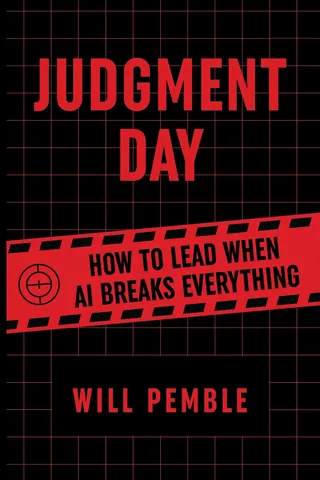
The method behind these answers is in Judgment Day and at goalboss.com/method. Corrections are welcome and will be dated. Where the evidence is thin this page says so rather than rounding up.